
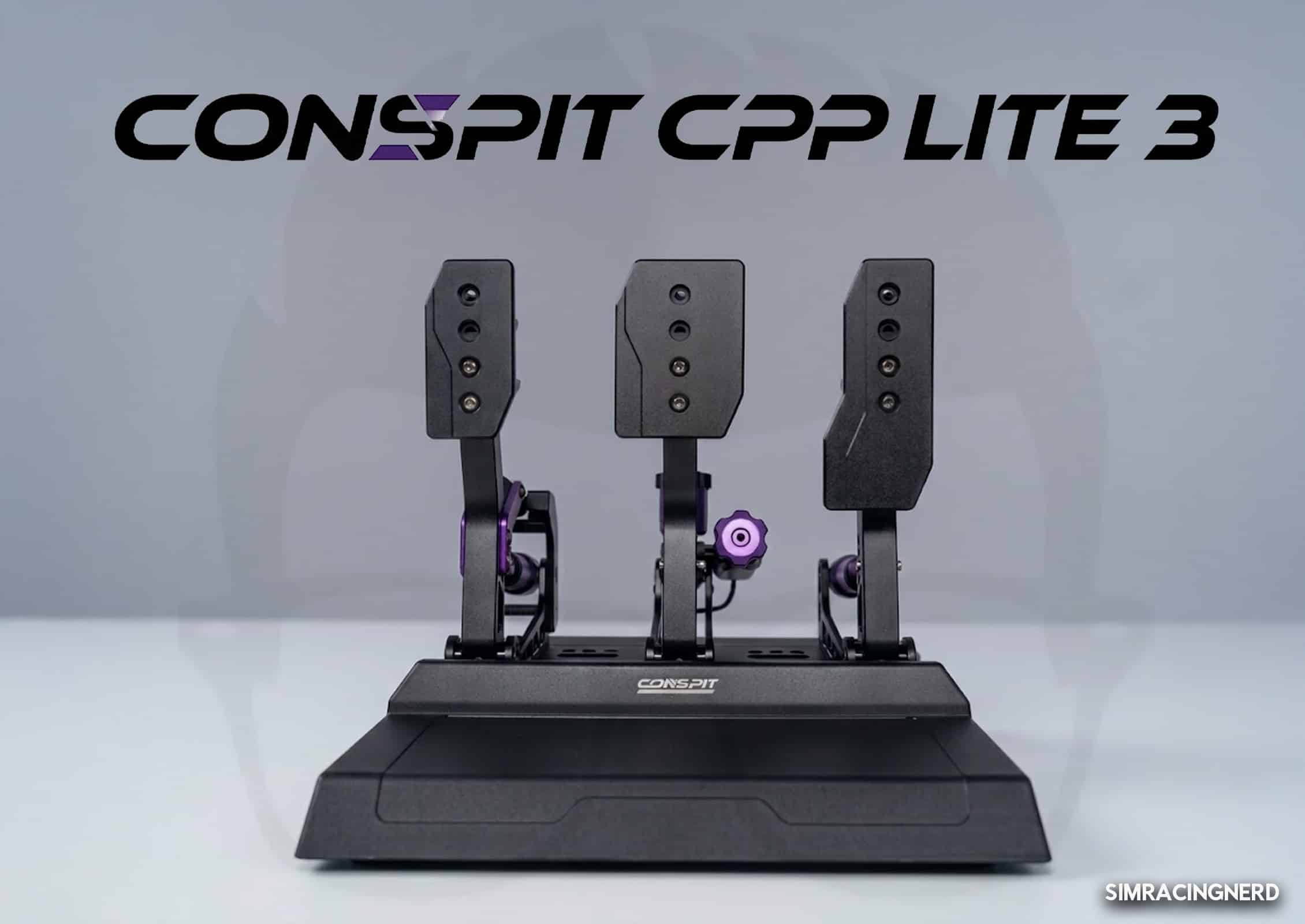

The Conspit CPP LITE 3 in a nutshell
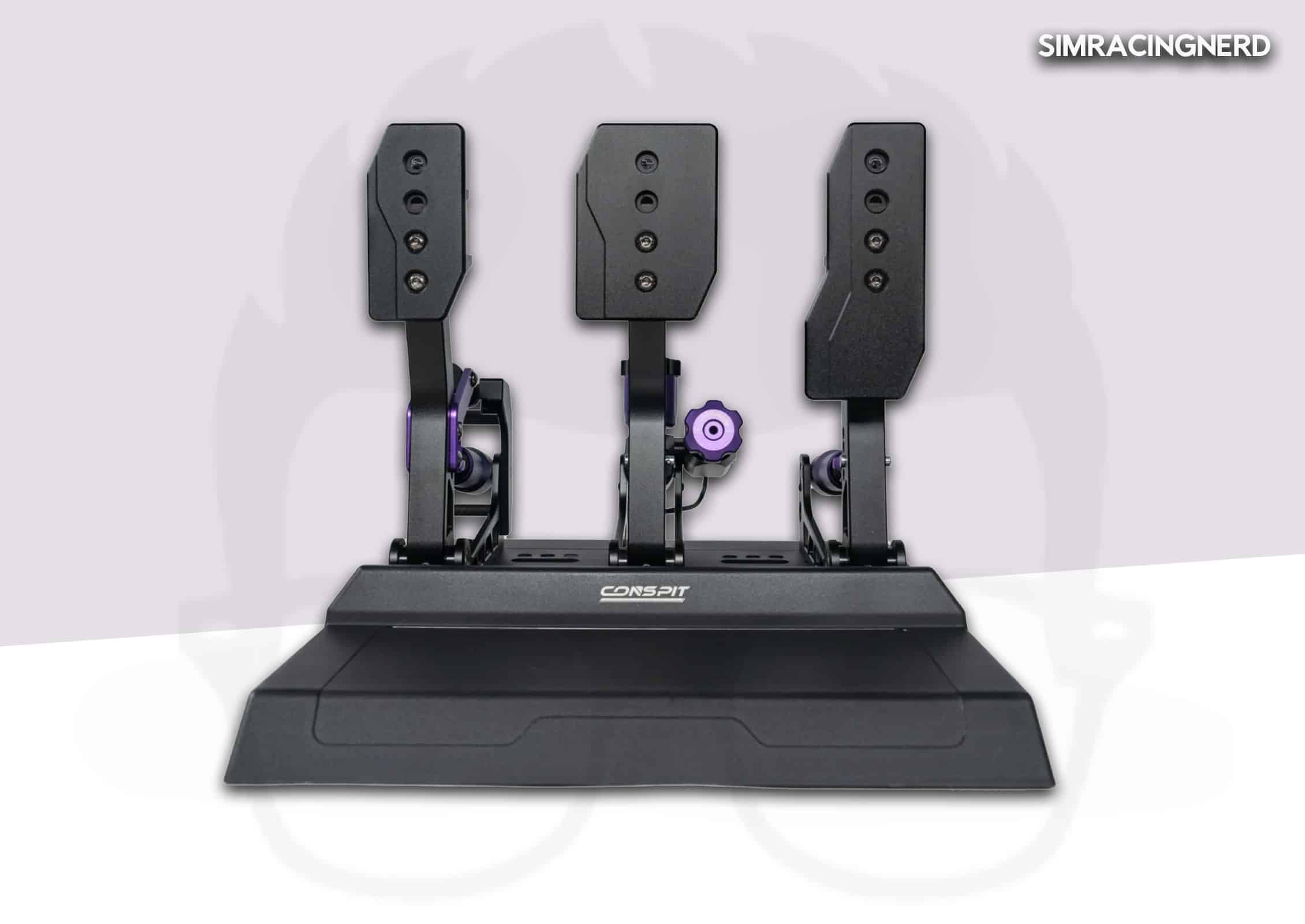
Advantages & Disadvantages
✅ Very competitive price
✅ Available in 2 or 3 pedal versions
✅ Brake with hydraulic system
❌ Plastic footrest, but the brand offers an aluminum variant
❌ No end stop
If you’re looking for a sim-racing crankset, there are 2 main families: Load Cell and hydraulic. Of course, there are also those with a simple spring system, so without too much feedback. There are also hybrid systems with a Load Cell and hydraulic mechanism. And finally, there are the active cranksets, which literally use a DD base motor to provide feedback.
We’re all familiar with brands like Simagic, Fanatec, Simucube, Logitech and Moza Racing. These players are well established, and offer a complete catalog of sim-racing peripherals.
There’s also a newcomer in the queue, and that’s Conspit. This Chinese company offers a complete range of sim-racing peripherals. Among the products on sale is the CPP Lite 3 crankset. This is a hydraulic peripheral, and we’re going to test it on our sim-racing setup to see what it has to offer.
Main features and technical specifications of the crankset
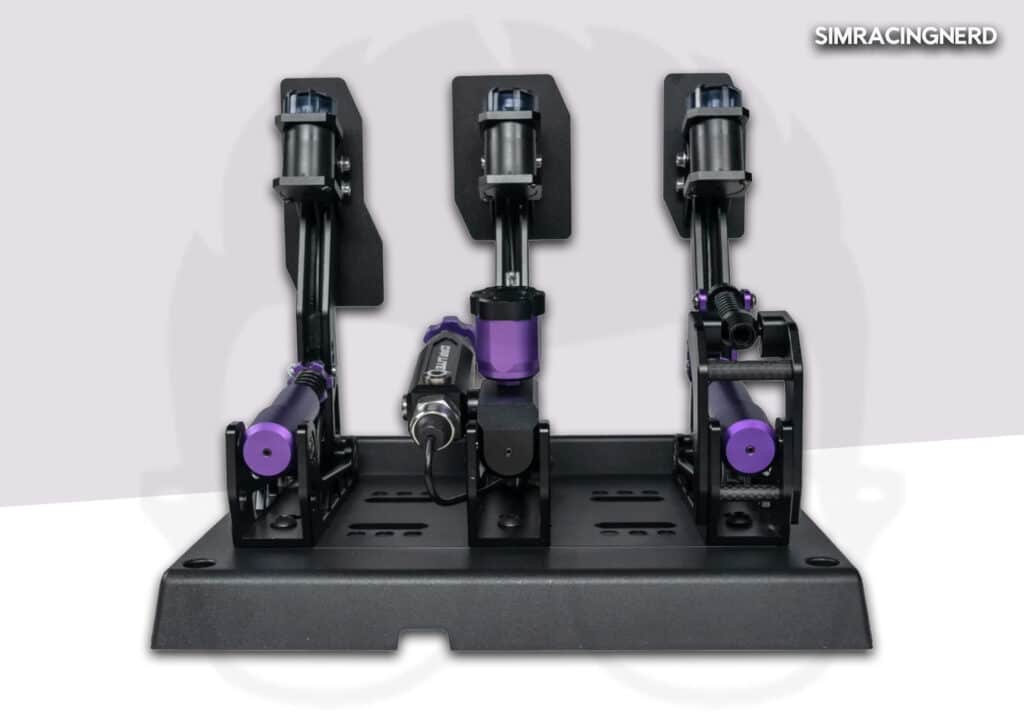
- Full aluminum structure for pedals and part of the pedal plate (except footrest, which is plastic)
- Brake pedal with hydraulic system and elastomer for preloading
- Gas pedal and clutch with Hall sensor
- Available with 2 or 3 pedals
- Vibrator motors for gas pedal, clutch and brake feedback
- Spring-loaded gas pedal and clutch pedals, which are non-linear on the clutch.
- PC and Conspit Link compatible
CPP Lite 3 design
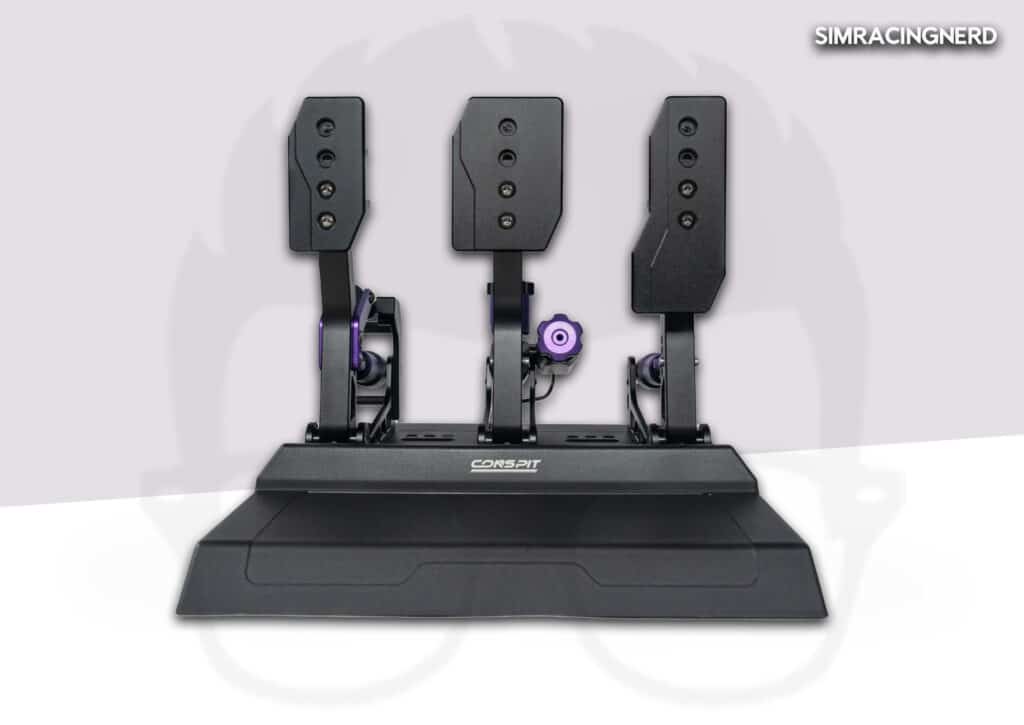
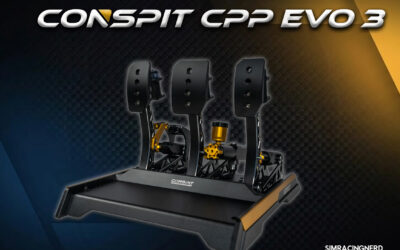
I like the design of the CPP Lite 3. It’s a fairly simple crankset, but it’s still brightly colored: purple. This color is found on the device’s resistance mechanisms, and on the sides of the support plate.
The three pedals – or two, as the CPP Lite 3 is available in a clutchless version – are identical in shape, apart from the pedal plate, which changes depending on the device used. At the rear of the pedals is a motor/vibrator, designed to enhance immersion.
To cut a long story short, I think the CPP Lite 3 is truly beautiful.
Customized assembly
To mount the CPP Lite 3 to your setup, you can use the mounting plate included in the box to attach the pedals, or you can attach the pedals directly to your cockpit. There’s really no limit or constraint on mounting, and the choice essentially comes down to your riding preferences.
A brief aside concerning the support plate: it’s made entirely of plastic, but the part that holds the pedals is reinforced with aluminum. As a result, the footrest is made of plastic, and this may not please everyone.
Manufacturing and finishing
Apart from the outer shell of the base plate, which is plastic but metal-reinforced at the rear, the entire CPP Lite 3 is made from CNC-machined aluminum. It’s well made, with rounded edges throughout, and a very good finish. From the paintwork to the logos, colors and assembly, everything is meticulous and worthy of a quality device.
Finish quality is on a par with that of direct competitors such as Moza Racing and Simagic.
Bottom bracket adjustment
On the support plate, you have several positions for attaching the pedals. You can move the pedals in depth and sideways. This allows you to find a good riding position, but there’s a limit to how far forward you can move the pedals.
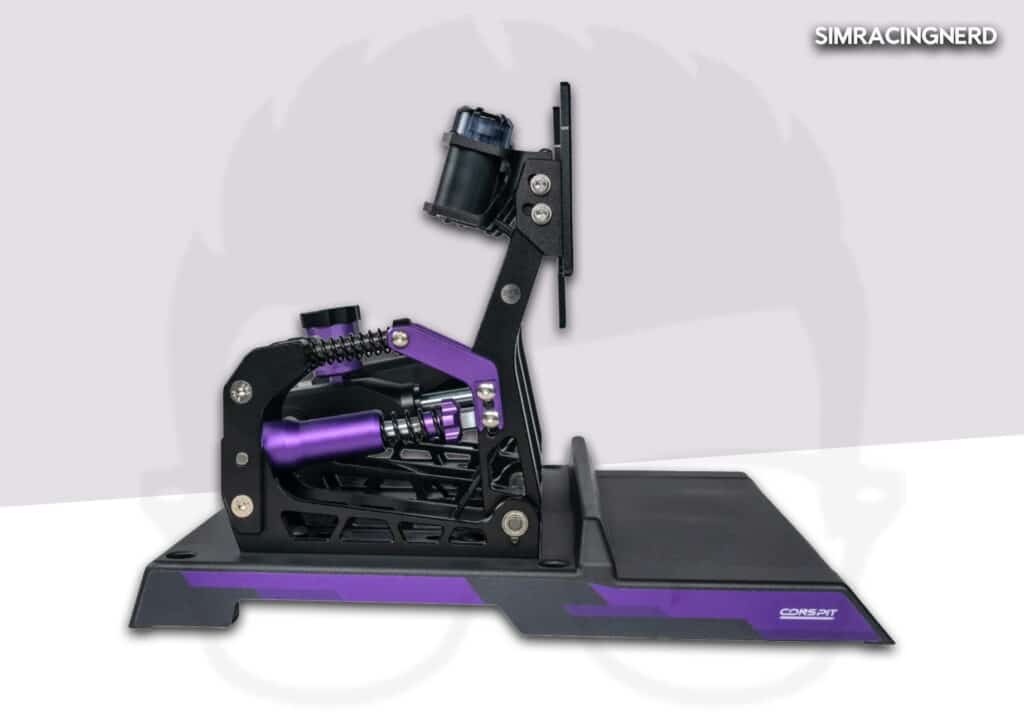
As for the pedals themselves, they offer several degrees of inclination via tool-free pins, and the pedal plate also moves vertically. It may take a little time, but you’ll eventually find the right riding position.
In terms of feedback, changing the pedal inclination will affect the resistance of the mechanisms, as well as the flexibility of the gas pedal and clutch. For the brake, you have the inclination and a knob to alter the mechanism’s compression.
Sensations during play
Once fitted and adjusted, the CPP Lite 3 proves to be really good on GT and Formula races. It takes half an hour to find your feet on the brake, but it’s time well spent.
Let’s talk about the brake, because it’s clearly this crankset’s strong point. Inside the cylinder, Conspit has combined elastomer and hydraulic fluid, and you can feel it directly under your foot. The feeling is dense, progressive and communicative. To adjust preload, you have a knob accessible directly on the crankset, without tools. It’s simple and effective, and once you’ve found the right setting, the brake is a pleasure to use.
The throttle is adjusted by pedal position and spring. On the stroke, it’s linear, smooth and responsive – no nasty surprises. The only annoying thing: there’s no end stop. Some riders won’t notice it, others will find it problematic.
The clutch (3-pedal version only) is well thought-out. The stroke is smooth up to around 70-75%, then a small non-linear actuator tilts the pedal suddenly. It’s realistic, well-suited to GT use, and starts on the clock feel the same.
Last but not least: the vibrators. There’s one on each pedal, to simulate ABS, wheel slip and TC interventions. The feedback is discreet, so don’t expect powerful vibrations. But for those who just want a little extra tactile info without it being intrusive, it does the job.
Crankset compatibility
The Conspit CPP Lite 3 is compatible only with the Windows PC platform. Connection to it is via a USB cable, and you have Conspit Link for all software settings.
Speaking of the brand’s software, it’s really complete and easy to use for setting up this pedalboard. Curve, vibrato, feedback, deadzone, etc., you’ll find everything you need to configure the pedalboard properly, in addition to the hardware settings.
Value for money
As the CPP Lite 3 is available in 2 versions, the price is not the same. Expect to pay around €500 for the 2-pedal version and around €700 for the 3-pedal version, depending on the retailer.
It’s clearly a budget, but one that remains coherent in the face of direct competition. The Simagic P1000 in hydraulic configuration, for example, starts at around €600 in its basic version and easily climbs above €900 with options. The CPP Lite 3, on the other hand, offers hydraulics from the outset, without having to pay for extras. In this segment, the price/performance ratio holds up well.
My verdict on Conspit’s CPP Lite 3 crankset
After several days with the CPP Lite 3, the results are clearly positive. It’s a well-built, well-finished crankset, and above all, easy to get to grips with. Adjustments are accessible, it’s quick to get to grips with, and when you’re racing, the feedback is right where you want it.
He’s really in his element in GT racing, and does very well in Formula, provided he spends a little time on the brake settings. It’s not complicated, but it requires a minimum investment.
If you’re looking to discover Conspit or switch to hydraulics without blowing your budget, the CPP Lite 3 is a very good entry point. The only question that remains after this test is long-term durability, particularly that of the elastomer in the hydraulic system. It’s something to keep an eye on, but nothing to pass up.
0 Comments