
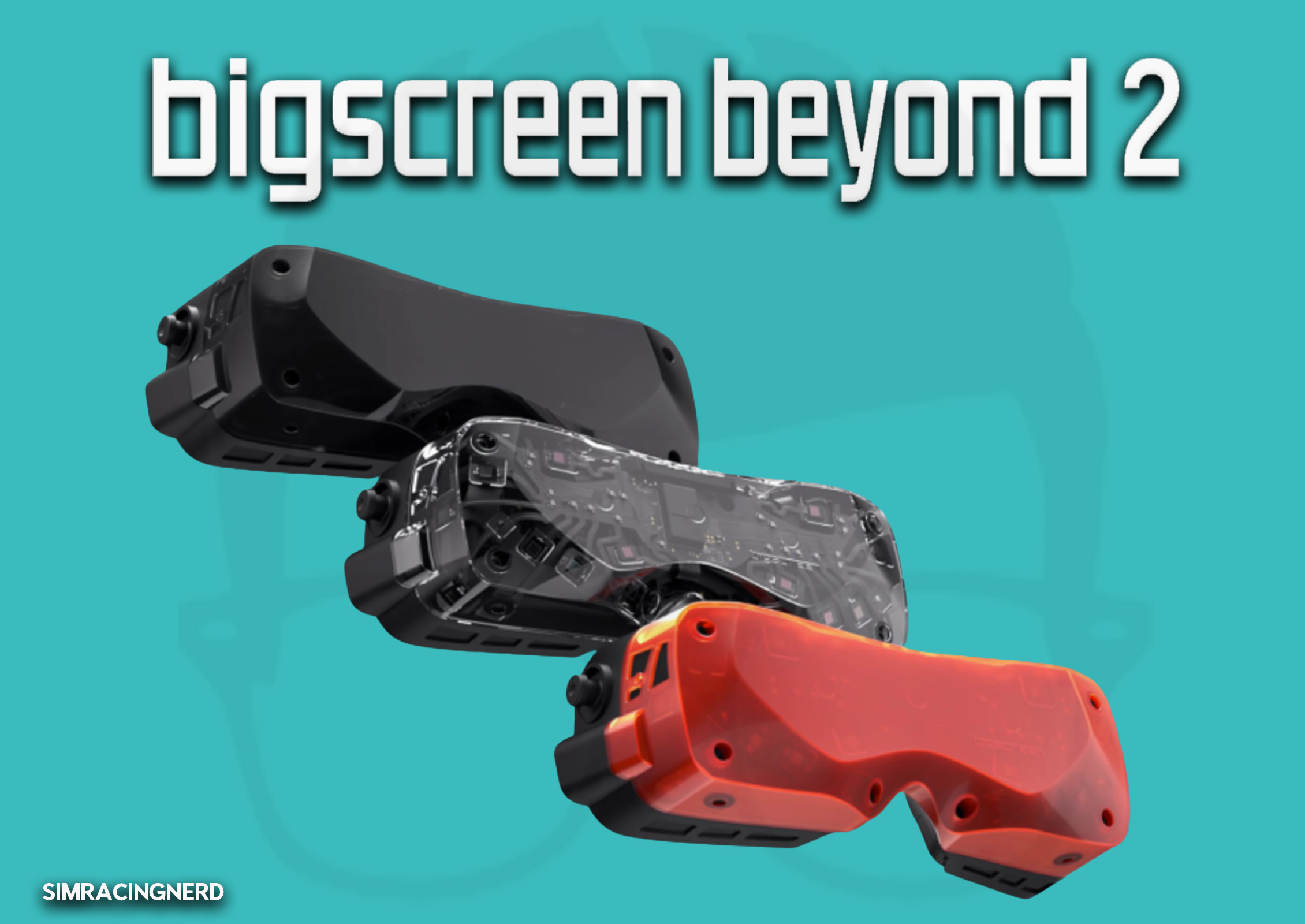

The Bigscreen Beyond 2 in a nutshell
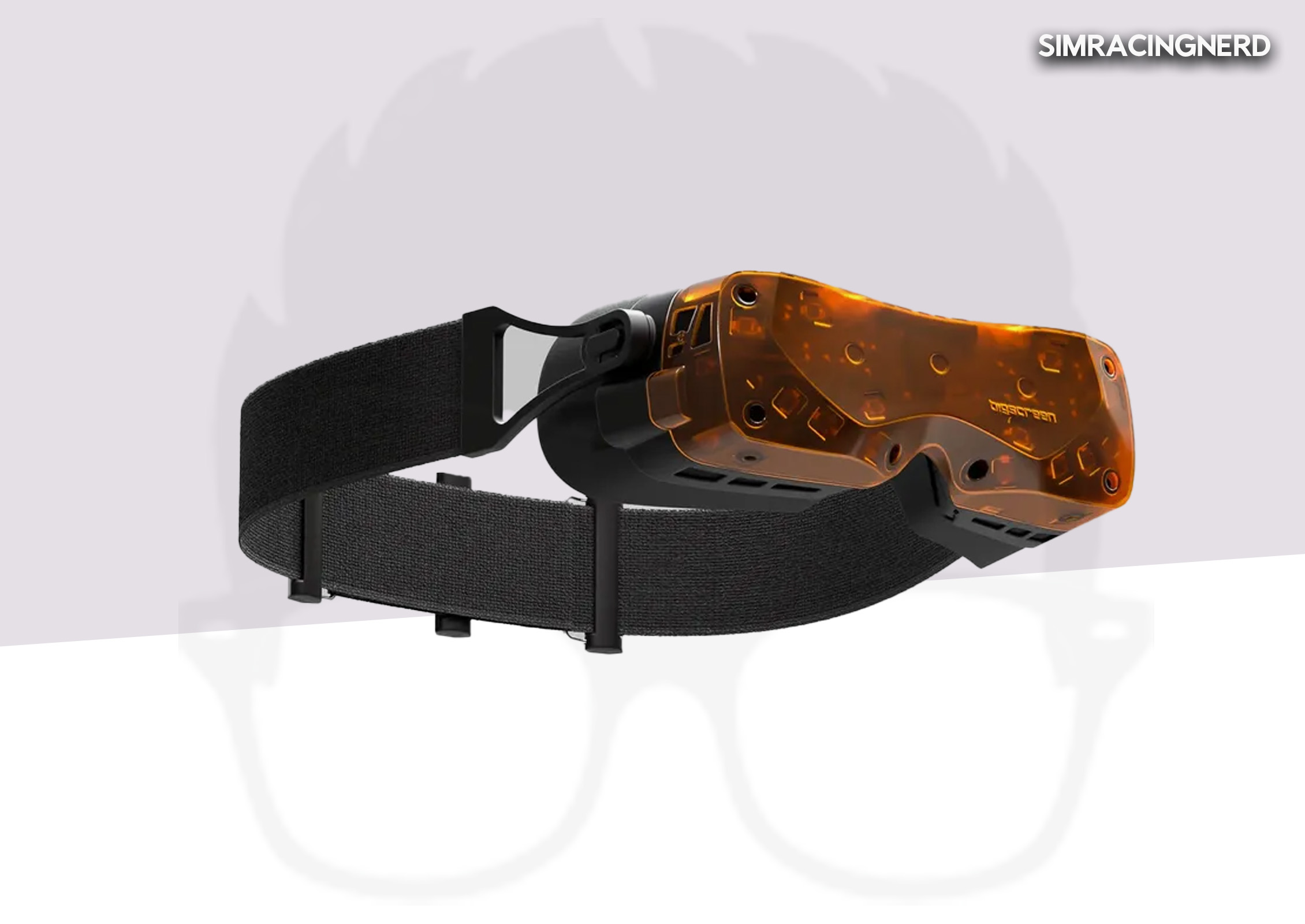
Advantages & Disadvantages
✅ Available in several versions with Eye tracking
✅ High resolution with Micro LED screen per eye
✅ Refresh rate up to 90 Hz
❌ Rather high price depending on configuration
❌ Eye fatigue that can occur after a few hours.
The world of VR headsets has come a long way in the last ten years, thanks in particular to the democratization of the Oculus Rift, Meta Quest and other HTC Vive. It’s a fairly niche market overall, but one that has nonetheless captured the hearts of many.
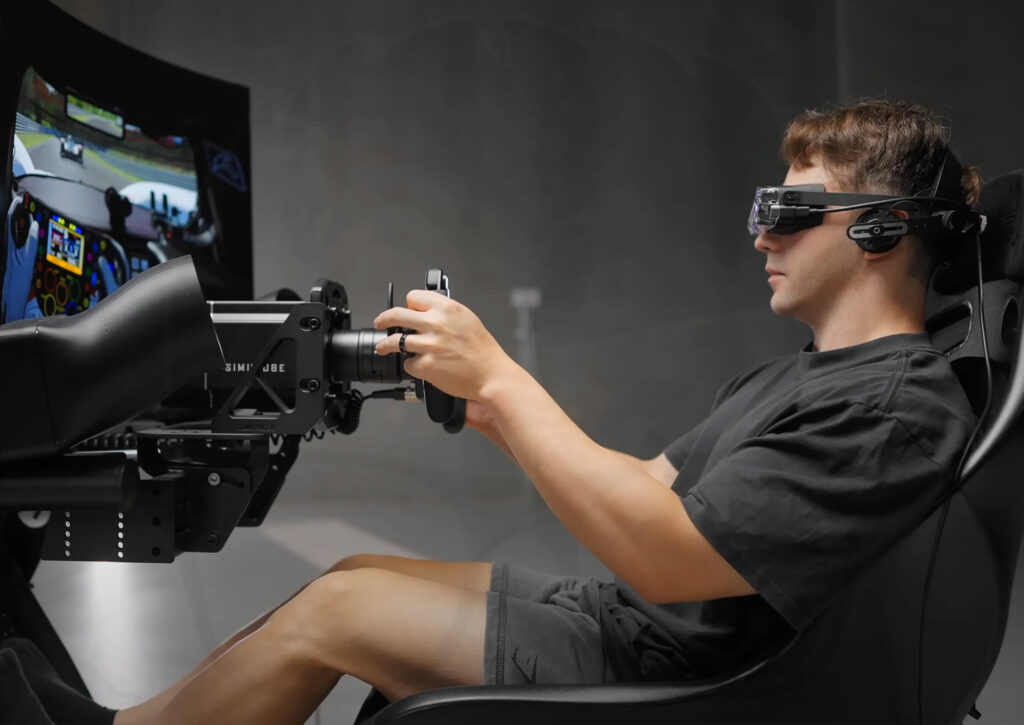
In sim-racing, the use of a VR headset is a route taken by many racers to add to the immersion experience, and I have to say that it works. Having the screens right in front of your eyes, with real-time management of the space around you, gives spectacular results in sim-racing.
Among the options currently available to drivers on the VR headset market, we have the Bigscreen Beyond 2. This is the replacement for the Beyond first of the name, and it brings many improvements over its predecessor. Let’s take a look at the Beyond 2’s sim-racing credentials.
Main features and technical specifications of the VR headset
- Dual Micro LED display with 2560×2560 pixel resolution
- Native refresh rate of 75 Hz, which can be increased to 90 Hz
- Individual screen adjustment for sharp images to suit the player’s eyes
- Eye tracking available as an option
- Field of view up to 116°.
- A weight of almost 110 gr for the helmet only, without straps
- PC-compatible only, and requires a good configuration
- Fiber optic cable for PC connection
- Dimensions 143x52x24 mm (W, H, D)
Beyond 2 design
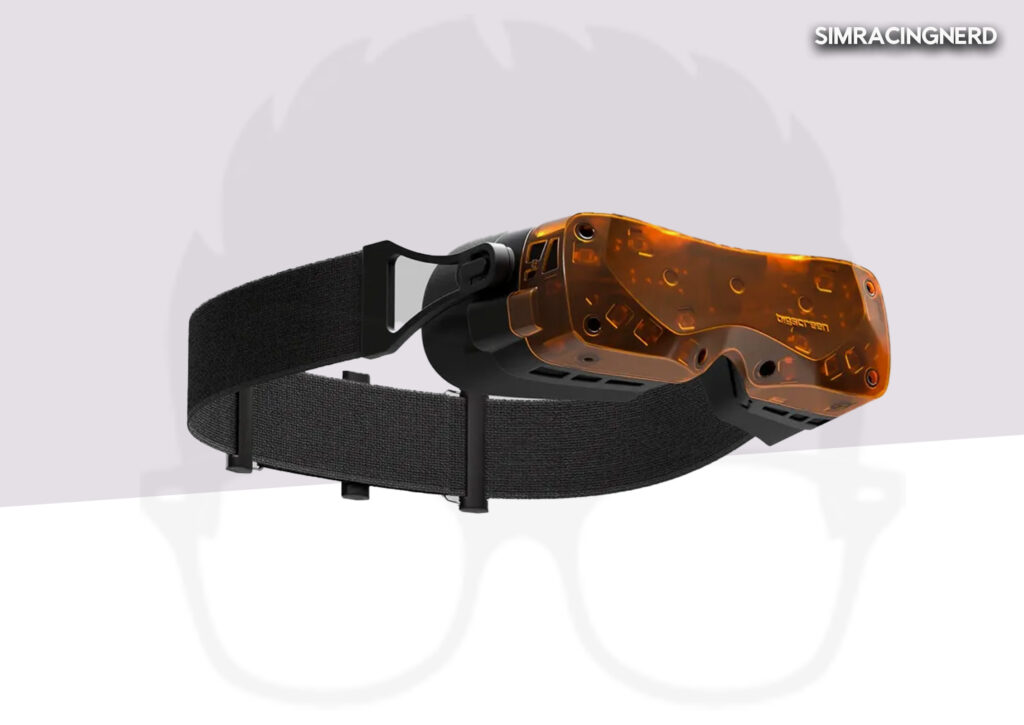
Unlike other VR headsets on the market today, the Beyond 2 is a device with a truly successful design. It reminds me of swimming goggles, albeit slightly larger.
It’s rectangular, and a variant is available with a transparent front. For the rest of the Beyond 2, there’s a fabric strap at the back, and this is black, as is the helmet. The Beyond 2’s design is discreet overall, but I have to tell you that there’s a version with an orange front panel.
Comfort and ergonomics
The Beyond 2 weighs in at 107g without the strap, making it the most comfortable VR headset on the market. It’s compact, very light to wear and you won’t feel it on your head at all.
As for the strap, it’s made of fabric and allows you to adjust the helmet for a comfortable fit. And to ensure total blackness around your eyes, the Beyond 2 uses a standard gasket or a 3D-printed one, which is the result of a scan of your face.
A small point about the seal, and the helmet in general: given that the company has made a point of having a totally dark experience when the helmet is on, there is a small side effect that occurs. When you put the helmet on, the seal is so effective at blocking light that it traps heat inside.
As a result, after a few hours of play, the upper part of your face will be sweating, which can be disturbing for some. The trick to avoiding this is to take breaks of a few minutes every 30 – 45 mins of running, precisely to avoid heat build-up, and also to relieve your eyes.
Image quality
On each eye of the Beyond 2 is a Micro LED screen with a resolution of 2560 x 2560 pixels, and a refresh rate of 75 Hz. And behind each screen are lenses to adjust the image, enabling the headset to adapt to all gamers’ eyes.
The Beyond 2 also offers a 90 Hz mode, but the resolution drops to 1980 x 1980 Pixels, and the image is upscaled to get closer to the native 2560 Pixels. In practice, I didn’t notice any difference between the 75 and 90 Hz modes, and I have to say that I’d rather have more FPS than a sharper image.
Unlike the Beyond 1, the 2 offers better edge distortion management, which enhances the overall quality of the images generated by the screens. The Beyond 2 does what all other high-end VR headsets do, and the images it produces are of good quality.
Beyond 2 headset settings
As far as Beyond 2 adjustments are concerned, you have those available on the strap to adapt the helmet to riders’ heads, but also on the lenses of each screen, and the latter are independent. The result is highly advanced adjustments for each eye.
Bigscreen also offers a standard helmet seal, and a 3D-printed one that’s the result of a scan of your face. The latter is a hair thicker than the standard one, and adapts perfectly to your face, guaranteeing total blackness for unrivalled immersion.
Sensations during play
In sim-racing, the Beyond 2 proves to be an excellent tool, or peripheral, to enhance racing immersion. The two 90 Hz Micro LED screens offer an image that’s sharp, fluid and not much distorted at the sides, something that was present on the Beyond 1, but the brand’s engineers quickly corrected this.
The big plus of this helmet over the sim-racing competition is its weight. The Beyond 2 weighs in at just under 110g, and you can’t feel it at all on your head. It’s as if you were wearing a pair of glasses that weigh almost nothing at all, are comfortable (within a certain time limit), and offer good racing immersion.
As for the field of view, we’ve got 116°, which is really not bad for sim-racing. That’s more than an Oculus Rift, for example, or a Quest, which makes the Beyond 2 an excellent candidate for virtual racing. You’ll see much more to the sides, limiting head movements around your environment.
The Beyond 2 looks great, and is ideal for sim-racing, but it does have one slight design flaw, and that’s the gasket that insulates the upper part of your face, and therefore leads to localized heat build-up. To avoid this, I advise you to do sim-racing sessions lasting less than an hour, remove the helmet for a few minutes, and put it back on afterwards.
Beyond 2 headset compatibility
The Beyond 2 is only compatible with Windows PCs, and those with a good configuration. If you don’t have an RTX 2070 or RX 5700, with 16 GB RAM and a CPU with at least 4 cores, don’t even think about using this VR headset.
I’m well aware that sim-racing setups touch virtually everything in terms of PC, but the VR experience is pretty hardware-intensive.
As for the sim-racing titles you can use the Beyond 2 on, I’d say that any that support VR headsets will work just fine.
Value for money
The Beyond 2 retails for between €1,370 and €1,650, depending on whether you opt for Eye Tracking, the version with pink visor or the universal joint.
The value for money of this VR headset is decent for what it has to offer. It’s still expensive, I admit, but the immersion is there.
My verdict on Bigscreen’s Beyond 2 VR headset
Compared with what’s available on the market, the Beyond 2 outshines the competition in two main respects: its very light weight and its 116° field of view. If you’re looking for a sim-racing VR headset with a high level of immersion, and your bank account can handle it, then I recommend the Beyond 2.
0 Comments