
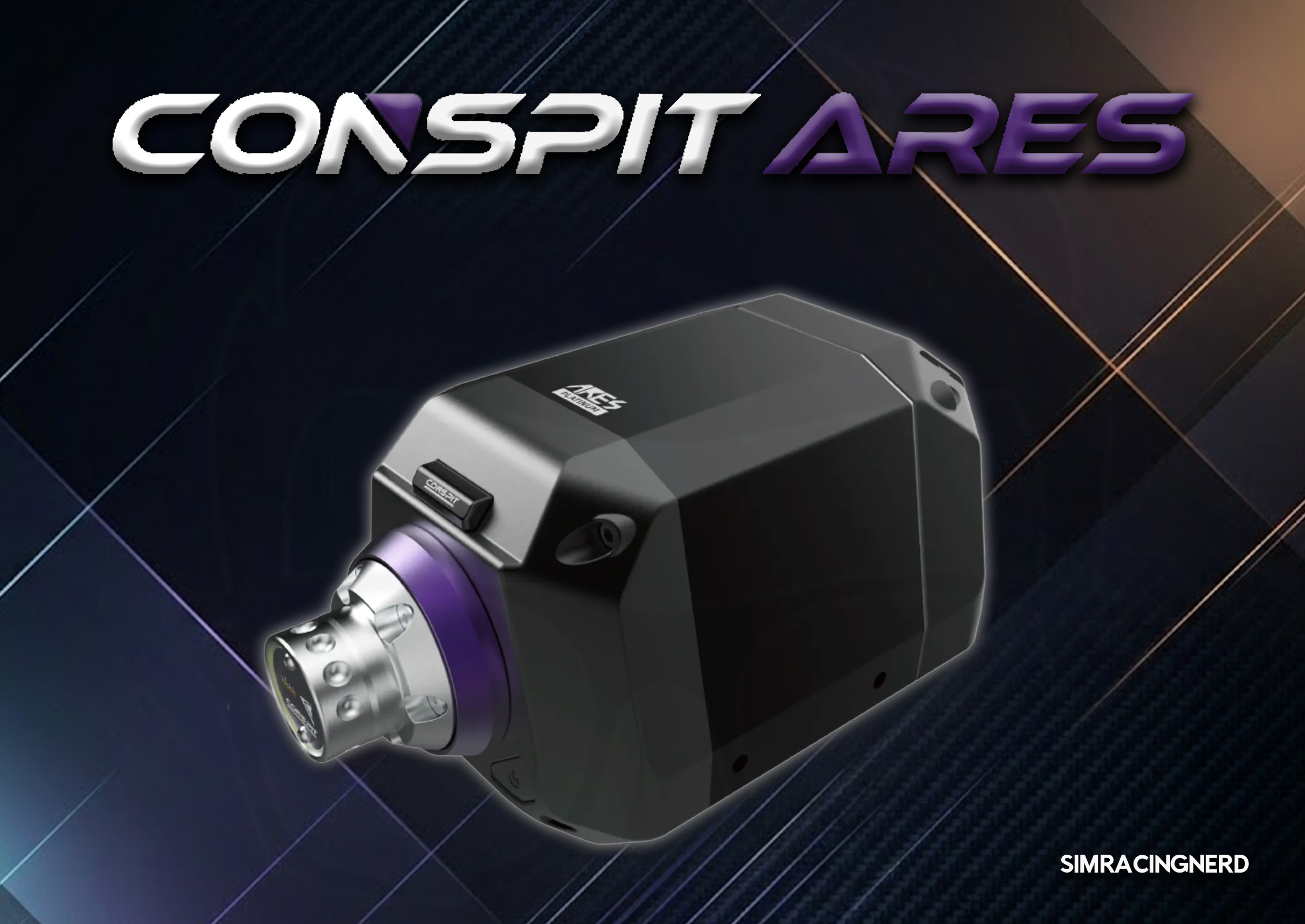

Conspit is expanding all over the world, with a complete range that aims to compete with brands such as Fanatec, Simagic and Moza on their own turf, namely that of high-performance setups that don’t break the bank.
Chinese manufacturer Conspit offers a range of sim-racing peripherals aimed at beginners, amateurs and even seasoned pilots, with a broad spectrum of products for every category of pilot.
The manufacturer’s range includes 3 DD bases ranging from 8 nm to 20 nm in torque. They’re called Ares, and we’re going to find out more about them in what follows.
Ares in 8 nm version
Base design
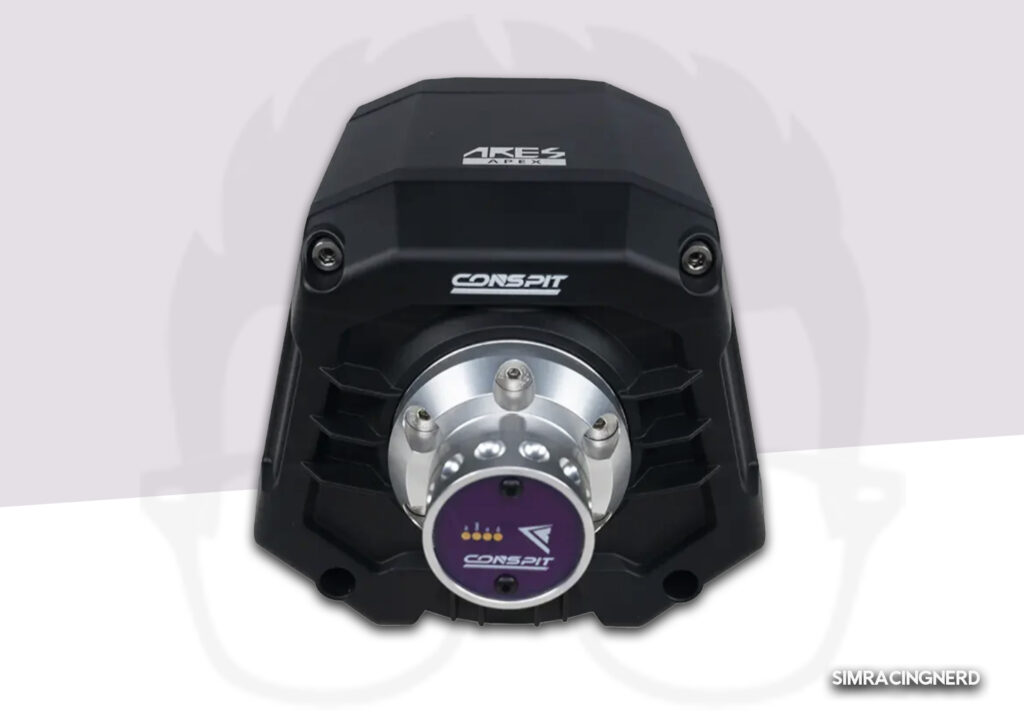
Visually, the little 8nm Ares base is very simple, with a matte black casing and a silver drive shaft. The Conspit logo can be found on the end of the shaft, as well as on the top of the base’s front plate.
In terms of shape, it’s halfway between a square and a rectangle, with a medium length I’d say. Broadly speaking, the Ares 8 nm looks a bit like Moza’s R21 and R25 bases, but much smaller. It’s beautiful, simple and will go with any sim-racing setup, even if, once installed, it hides behind a steering wheel.
Manufacturing quality
The base uses aluminum for its entire structure, i.e. the casing and drive shaft. It’s very well made for the segment it’s aimed at, and I’d go so far as to say it’s a tad premium.
It’s not at the same level as Fanatec’s ClubSport, for example, but it’s close. It’s clearly at the level of the CSL range, with a fine finish, paintwork that holds up and faultless assembly.
Base sensations
The electric motor uses a 21-bit encoder, with a Dual Core processor for calculations and electronics management. In terms of feedback, the base is very communicative over its power range, i.e. 8 nm of maximum torque.
Please note: torque is not constant, but peak, and this means that settings must be made with this in mind to avoid clipping. The base software is complete, giving you more or less total control over the behavior of the device.
On GT tracks, it’s a pleasure to use the Ares, even if it only puts out 8nm of torque, making it perfect for beginners and those with a little experience. What’s more, the electric motor benefits from a special treatment that limits cogging, much to our delight.
Is it worth it?
This base sells for around €400, making it good value for money. The base is communicative in terms of feel, is easy to adjust thanks to comprehensive software and firmware, and is aimed at an audience new to sim-racing. It’s the perfect combo to make it a great success, in my opinion.
So, is the 8 nm version of the Ares worth it? Honestly, yes, it’s well worth the asking price, and represents a budget-friendly alternative to familiar peripherals from Fanatec, Simagic and Moza.
However, I’d like to make one thing clear: the brand is still young on the sim-racing market, and there’s a lack of information and data on the longevity of its products. So it’s up to you to weigh up the pros and cons, even if I’m convinced that a Chinese manufacturer wouldn’t venture onto the world market without a good warranty and properly tested products to back it up.
Ares in 12 nm version
Base design
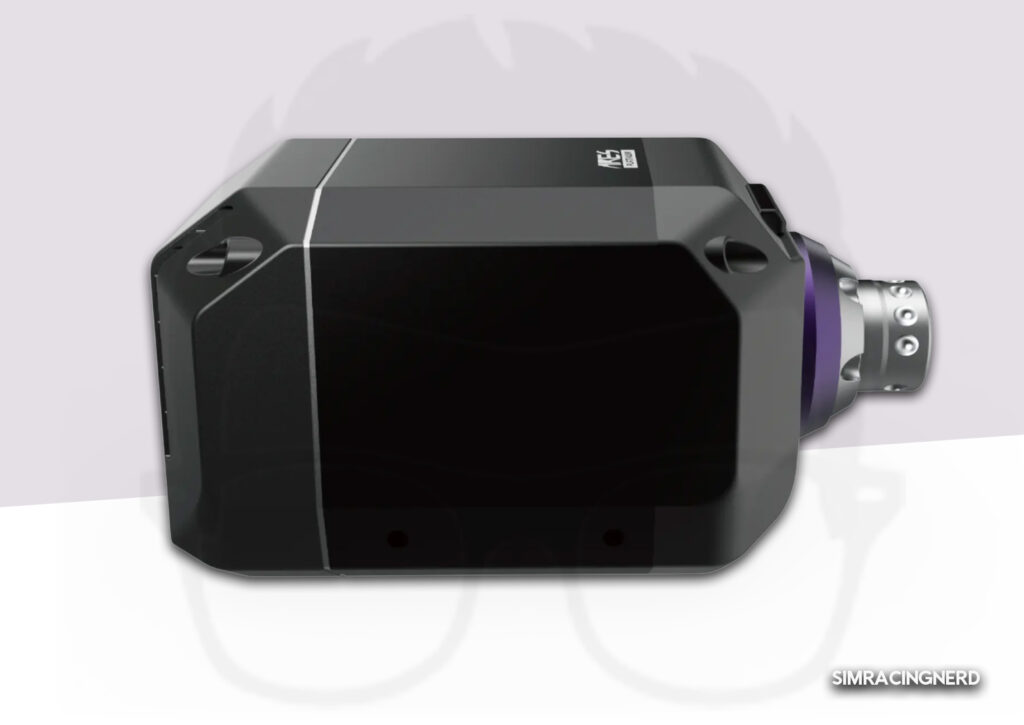
In the Ares 12nm design department, there are no major changes from the 8nm version. The base is visually almost identical to its little sister, but is obviously longer to accommodate a larger electric motor, and therefore heavier too.
There’s also a noticeable difference on the front face, with a purple ring surrounding the driveshaft at the junction with the faceplate. Speaking of the latter, it’s slightly different from the 8 nm version.
Manufacturing quality
The build quality of the Ares 12nm remains unchanged from the 8nm version. The casing is still entirely aluminum, as is the drive shaft. It’s still as well finished and premium as ever, with a high-quality paint finish.
In truth, I didn’t expect to see a decline in build quality, as the Ares 12nm covers the mid-range of Conspit’s DD bases, and the latter is very competitive in the sim-racing market.
Base sensations
In terms of feel, it’s much better than the Ares 8 nm, not because the base develops 4 nm more peak, but because of the way the power is delivered to the rider.
The motor uses a 23-bit encoder this time, as opposed to the 21-bit on the Ares 8 nm. Coupled with this, the electric motor uses in-house technology that considerably reduces cogging, or the jerking inherent in this kind of equipment.
Once correctly configured, the Ares 12 is a superb DD base to use for sim-racing, especially if you’re aiming for 8-10 nm of constant torque, with a slight margin for peaks like big shocks during a crash.
The software and firmware allow you to fine-tune all the base settings, providing a seamless sim-racing experience.
Is it worth it?
If you want a DD base that offers maximum feel at a contained price (under €600), then the Ares 12 nm is what you need. The target segment is highly competitive, with rival peripherals from Fanatec(ClubSport DD), Moza(R12) and Simagic(Alpha Evo 12) to name but a few.
I think the Ares 12 is the sweet spot for sim-racing fans looking for superb on-track sensations, a design that’s cool and a price tag that’s not stratospheric.
Ares in 20 nm version
Base design
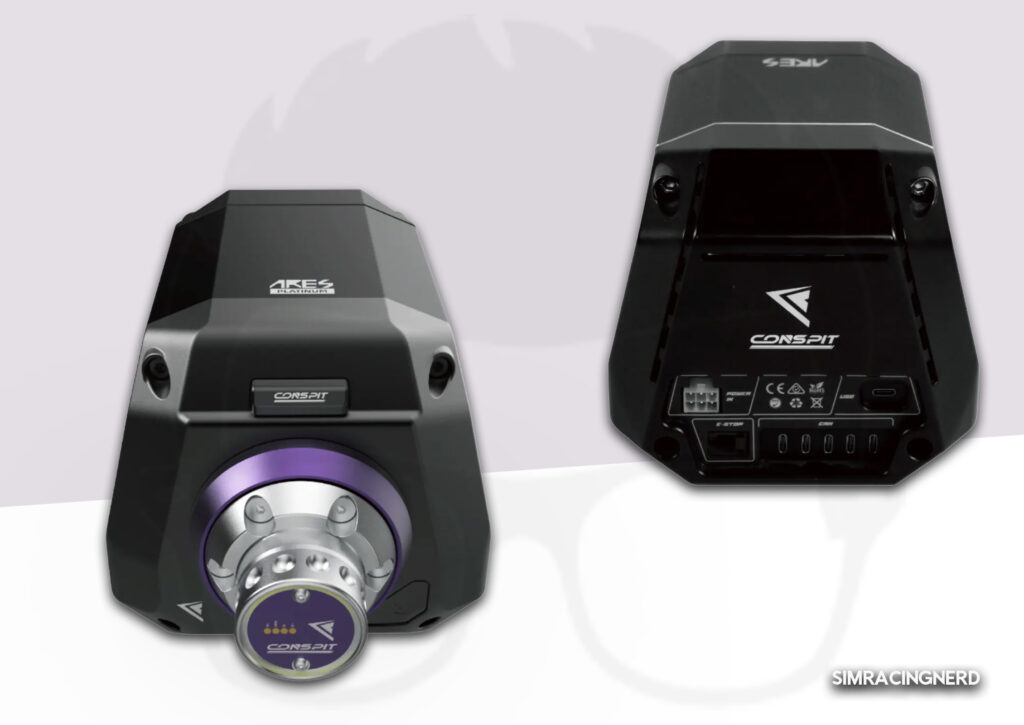
For the design of the Ares 20, Conspit thought it best not to change a winning team. As a result, the Ares 20 is a carbon copy of the Ares 12, except in terms of weight: the most powerful base is about half a kilo heavier than the mid-range model.
Manufacturing quality
Of course, the Ares 20 uses an aluminum frame, with a build quality that’s nothing short of premium. And that’s only to be expected, since we’re talking about the top of the range that the brand offers, both in terms of build quality and feel. It doesn’t get any better than this from Conspit.
Base sensations
The base output is 20 nm at peak, and this power is very linear at the output of the electric motor. We’re still using a 23-bit encoder, a technology that limits cogging, and a lot of feedback is transmitted to the driver.
Think of the Ares 20 as a big Ares 12 that’s highly configurable, adaptable to any sim-racing competition, and also with a big power margin if you’re rather conservative. But I’m guessing that you’re probably not going to set this base to 12 nm, and take full advantage of its max torque. The brand knows this, and the base is 100% capable of it.
Is it worth it?
Once again, yes, I find Conspit’s Ares range of DD bases worth buying for a sim-racing setup, and the 20 nm variant costs around €800. At this price, the Ares is in the mid-range of the market, while offering features that enable it to compete without difficulty with the other DD bases of the moment.
If you want to try the Conspit adventure, I’m all for it.

0 Comments