

As the years go by, gaming platforms become more and more powerful. This also applies to gaming PCs and their GPUs, which are released every 2 – 3 years or so.
PC gaming is very impressive in terms of return on investment. So yes, you may lose an arm and a leg, but at least your machine will cope with any game without flinching, and even for a long time, which should delight virtual pilots.
But PC gaming isn’t that simple, because computer component manufacturers such as AMD, Intel and Nvidia offer different products in terms of power.
Between CPU, RAM, motherboard and GPU, plus PSUs, it’s easy to pick the wrong component for your system and find yourself lagging behind in terms of performance. The key element of a gaming tower is its GPU, or graphics card. This is what generates the frames, or images, seen on monitors. Its role is crucial in a gaming setup, and in what follows, we’ll take a look at the best available on the market for sim-racing.
The best GPUs for Full HD
Let’s start with the resolution that many gamers still use, namely Full HD, or 1080P. This resolution is losing ground to the 2K that will follow, as latest-generation GPUs are proving more than capable of running all titles in 2K at 60 FPS. Nevertheless, it costs money to move up to the next level, and Full HD still has a long way to go.
Nvidia RTX 5060 8 GB
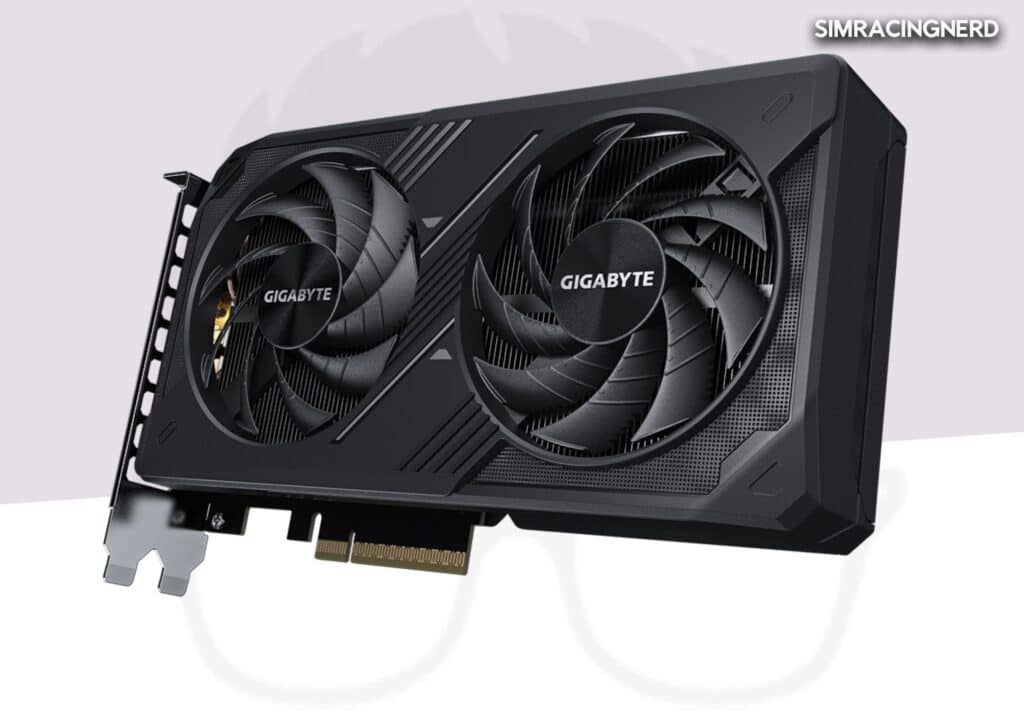
Nvidia’s RTX 5000s are recent additions to the range, bringing with them the 4th generation of Ray Tracing. The RTX 5060 8GB is what I consider the green brand’s entry-level gaming system, even if the RTX 5050 is technically the least expensive of the lot.
The 5060 offers solid performance in Full HD, especially when it comes to sim-racing titles. You’ll get over 60 FPS at this resolution without putting too much strain on the graphics card. However, it will quickly show its limits if you intend to move up to the next level, i.e. 2K.
Indeed, at this resolution, it’s better to have more memory than processing power, as textures take up more space in the GPU’s vRAM. With 8 GB, you can comfortably play ACC or F1 25 at high FPS, but don’t push things too far.
AMD RX 9060 8 GB
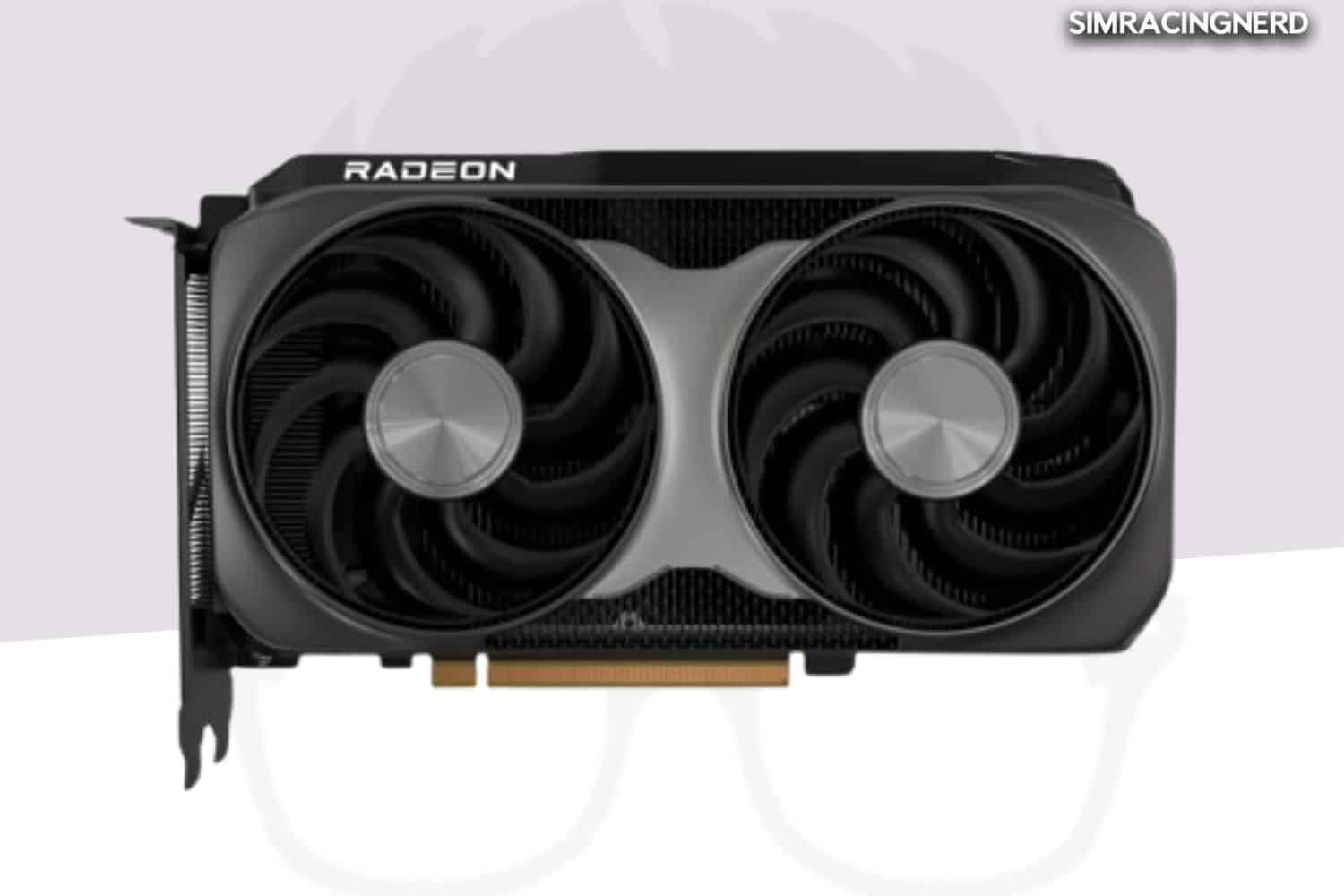
The 8GB RX 9060 is AMD’s answer to the 8GB RTX 5060, but unfortunately in 3rd generation Ray Tracing. If RT light processing is important to you, then only Nvidia represents a viable option, as other brands are lagging behind.
The RX 9060 offers a very good level of performance, even though it lags behind the RTX 5060 on most titles. Don’t worry, the gap is around 10%, which could be considered negligible. But where the AMD team makes up for it is on price. You’ll find the RX 9060 less expensive than Nvidia’s offering, which should help you get a much more balanced setup.
Once again, this card is limited by its vRAM: 8 GB doesn’t do it at all on modern titles, but it works well in sim-racing. You’ll get well over 60 FPS in Full HD on a wide selection of racing games, whatever your preferred discipline. If you intend to keep your machine for more than 3 years, it would be wiser to opt for more vRAM.
Intel B570 10 GB
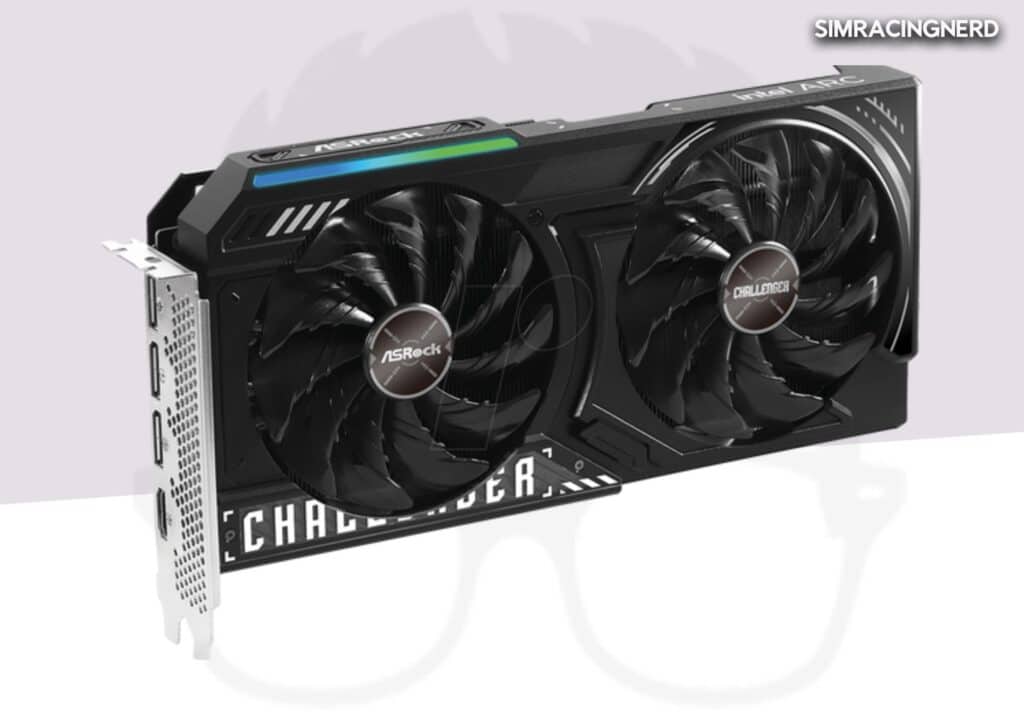
Although Intel is a leader in the CPU market, its presence in the GPU field is recent. The brand is targeting the entry-mid-range with a truly successful Battlemage range.
The 10GB B570 is a graphics card that doesn’t look like much. It’s powerful enough for Full HD, and even 2K thanks to its buffer. What’s more, the blue team applies a policy that hurts the competition: offering convincing products at much lower prices than those of the green or red teams.
Well, it’s a mixed bag for Intel. On the one hand, the B570’s hardware is powerful, but it clearly lacks the tools to make the most of its GPU. Between driver problems and game optimization, Intel will have to pull out all the stops to compete with Nvidia and AMD, and above all win the hearts of drivers and gamers.
The best GPUs for 2K
Now it’s time for the resolution that’s all the rage at the moment: 1440P. Here, you’ll need a powerful GPU, backed up by at least 12 GB of RAM.
Nvidia RTX 5070 or 5070 Ti
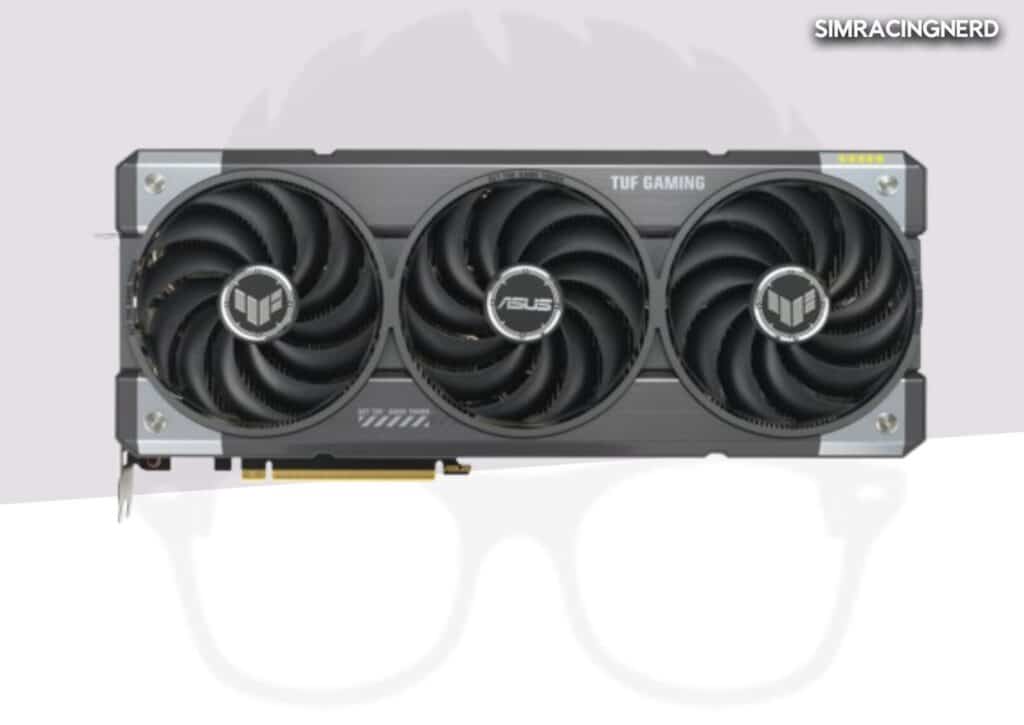
Once again, Nvidia finds itself on our list, because the brand’s products are quite simply very powerful. Sometimes excessively expensive, I must admit, but when it comes to power, Nvidia knows its stuff.
The RTX 5070 and 5070 Ti are mid-tier GPUs. These two graphics cards are aimed at 2K gamers, even for the most resource-hungry titles. When it comes to sim-racing games, one of these graphics cards will happily deliver over 100 FPS on a wide range of titles.
If you’re a sim-racer and a gamer in general, and 2K is important, I’d recommend the 5070 Ti with its larger vRAM buffer.
AMD RX 9070 and 9070 XT
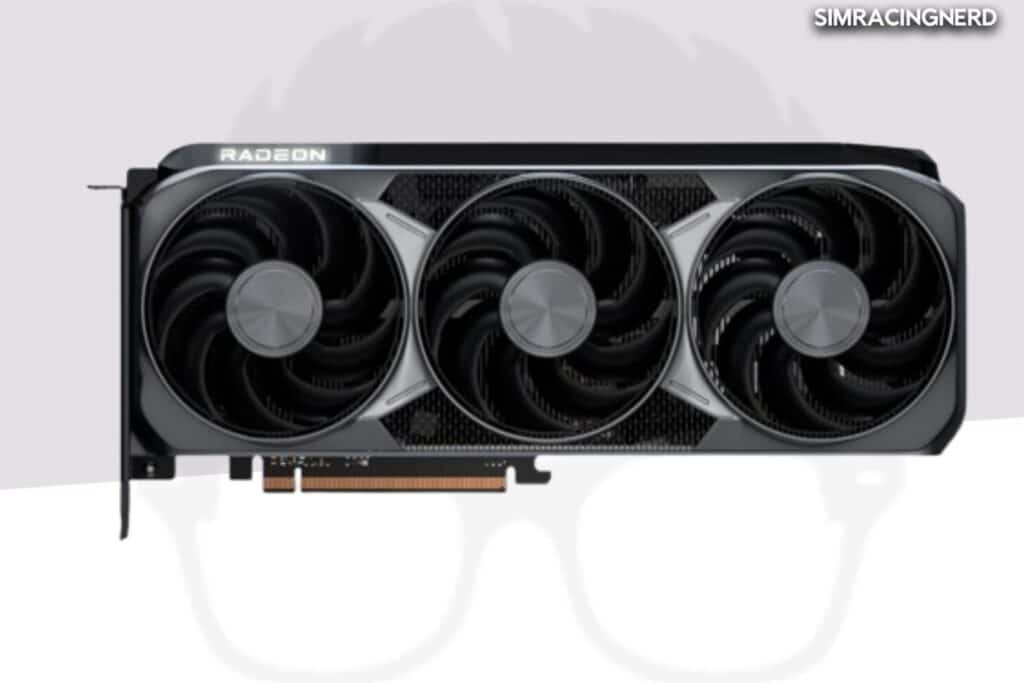
AMD keeps a close eye on Nvidia when it comes to GPUs, and the RX 9000 range is frankly a top performer, often within 10% of the green-logo manufacturer’s graphics cards.
The RX 9070s are AMD’s top-of-the-range offering at the moment. I don’t know if the brand will be offering RX 9080s or 9090s in the future, but both GPUs on this list perform well.
For 2K sim-racing, this is a choice you can make without thinking too much about it if you’re not on the green team. What’s more, RX 9070s are often much cheaper than RTX 5070s for almost identical performance, except when it comes to ray tracing, where Nvidia is well ahead of the competition.
The best GPUs for 4K
At this resolution, you’ll need not only a heavyweight GPU, but also a configuration with plenty of horsepower. You’ll need top-of-the-range processors from AMD and Intel, and at least 64 GB of RAM.
AMD RX 7800 and 7900 XTX
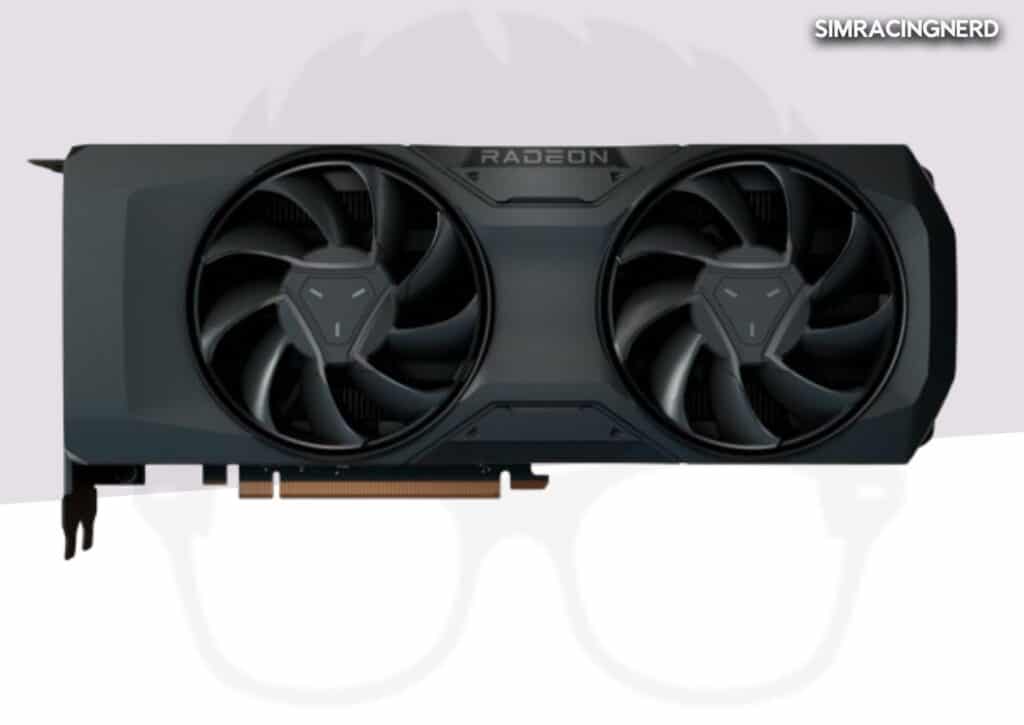
Speaking of 4K, we must inevitably mention the top of the range from Nvidia or AMD. The RX 7900 XTX are very good GPUs for sim-racing 4K with their 24 GB of RAM, which is just enormous. What’s more, you’ve got enough under the hood to run moderate ray tracing at this resolution. But I must warn you: if RT is crucial to you, you’d better check out Nvidia’s RTX 4000 and 5000.
As for the RX 7800, you’ll get good 4K performance on F1 25 and virtually all other sim-racing titles. Don’t expect over 100 FPS with these GPUs at this resolution, but it’s playable at over 60 FPS.


0 Comments