
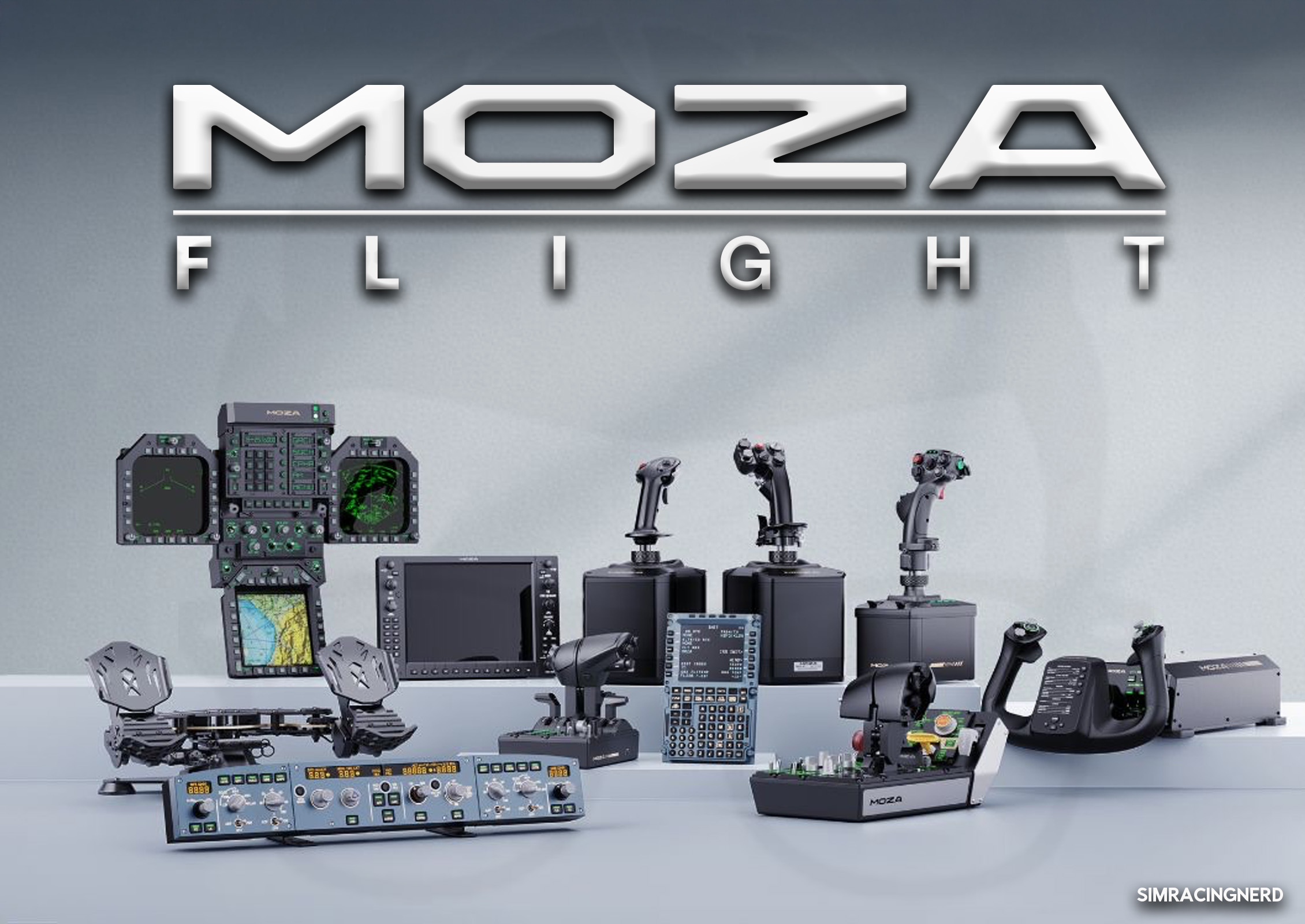

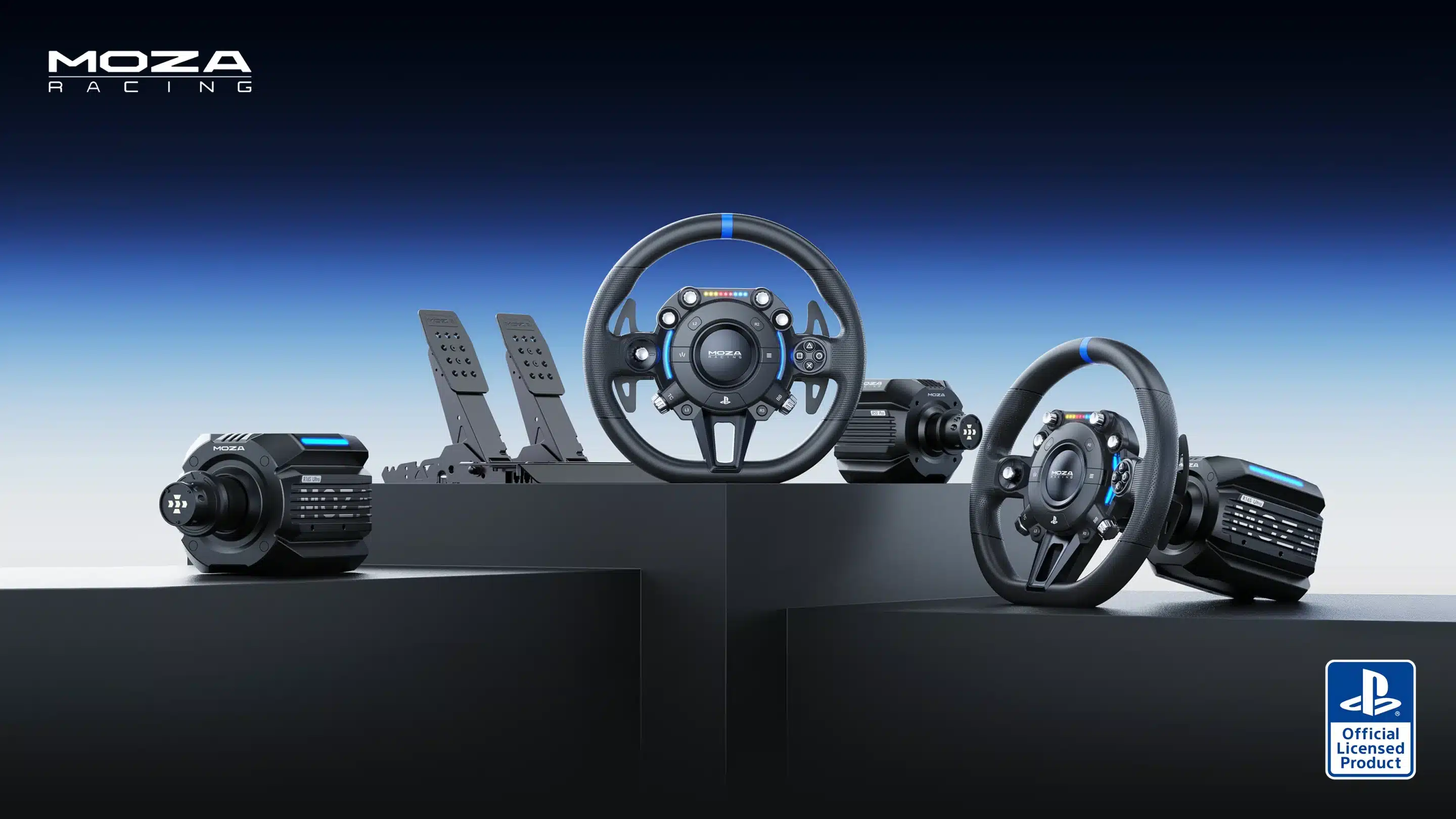
MOZA is taking a major step forward. Until now, the brand—well known among simracers for its steering wheels and Direct Drive bases—had limited itself to force-feedback flight controls in this market segment. This time, it is announcing an entire line of displays, avionics panels, and electronic modules to be integrated into the cockpit, under the MOZA Flight banner, a division of MOZA Racing. This is a significant shift: the company is moving from being a supplier of peripherals to a supplier of the entire electronic cockpit suite. Three key points deserve special attention to fully understand the announcement.
From MOZA Racing to Flight Simulator Avionics
The first is a shift in focus. MOZA no longer sells just what you hold in your hand, but everything that surrounds it: control modules, instrument panels, and flight management displays. The brand emphasizes continuity between its expertise in racing and aviation, and promotes the concept of a cockpit that evolves in stages—from a simple screen to a fully equipped cockpit. It’s the same modular strategy that made it a success in sim racing, now applied to flight simulation.
A product line that covers Airbus, Boeing, general aviation, and military aircraft
The second point is the breadth of the catalog, which is designed to cover several types of flight:
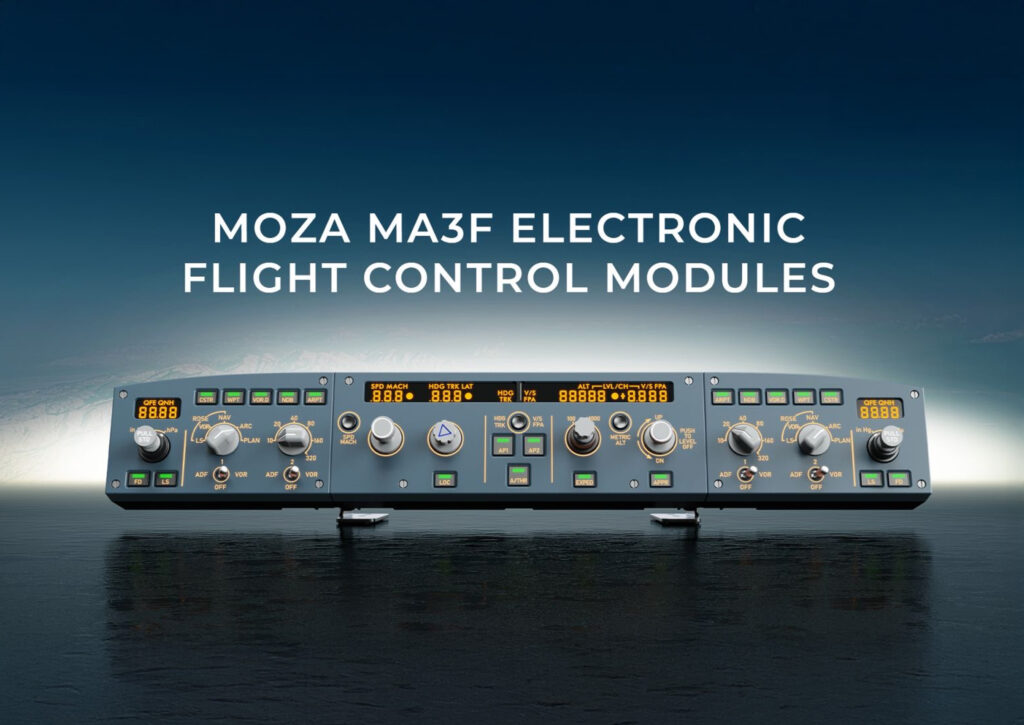
- The MA3F EFCM, an Airbus-style FCU and EFIS module with a dual-rail push-pull mechanism, priced from 109 euros (R and L versions) to 159 euros (main unit).
- The MA3F and MB7F Flight Computer Displays, which support the Airbus and Boeing workflows, respectively, feature high-resolution IPS screens and die-cast metal front panels, priced at 209 euros each.
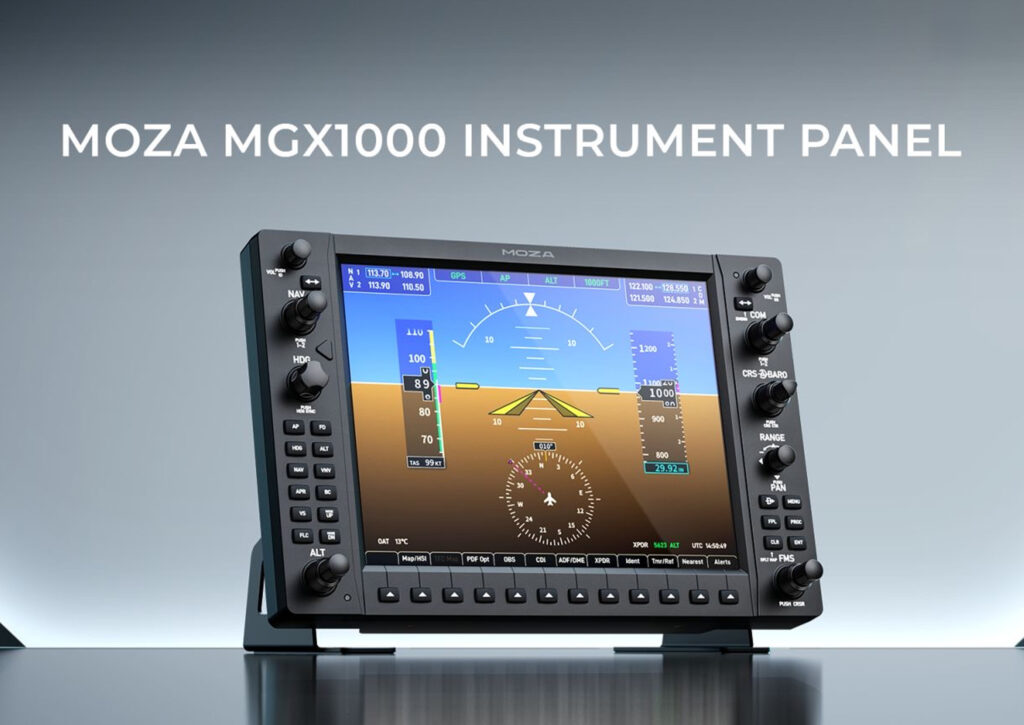
- The MGX1000, a G1000-style instrument panel for general aviation, featuring a 10.4-inch IPS display and precision encoders, priced at 469 euros.
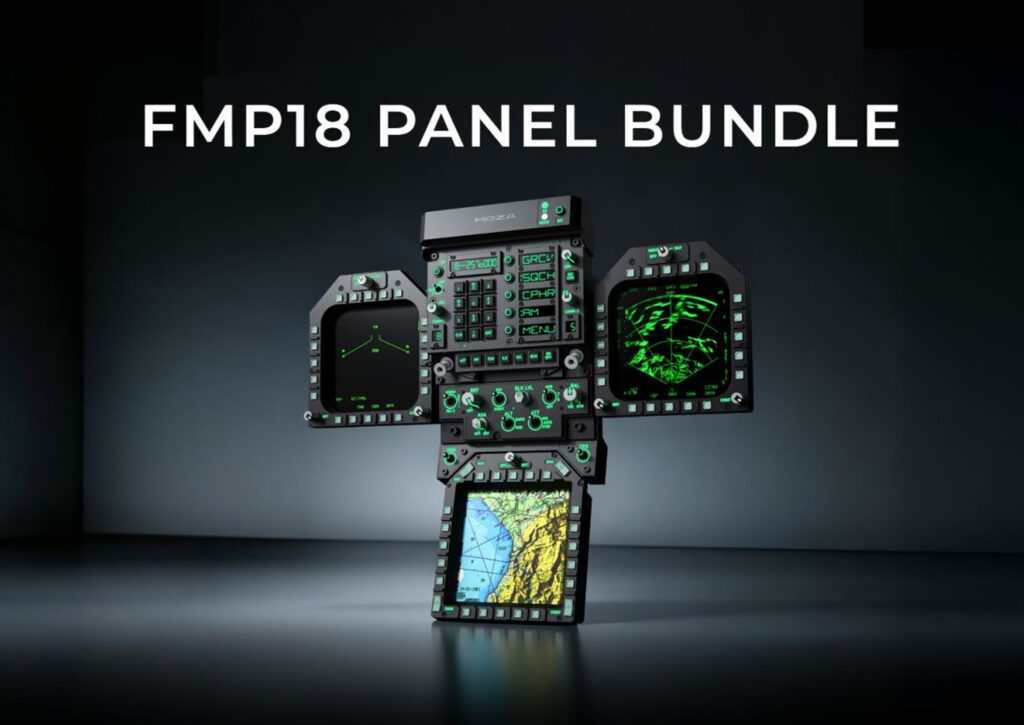
- The FMP18 Panel Bundle, a set of panels inspired by a carrier-based fighter jet cockpit, featuring interchangeable magnetic bezels, priced at 889 euros.
The entire system is controlled via MOZA Cockpit and MOZA Pit House for configuration, synchronized lighting, and telemetry.
DisplayLink: The Real Problem Under Fire
The third point is technical, and it’s undoubtedly the most interesting. The main challenge with a DIY cockpit isn’t so much the controls as it is integrating the screens: multiplying HDMI outputs, sometimes adding a graphics card, and managing the cables. MOZA is rolling out DisplayLink technology across its display lineup, which allows screens to be connected via USB without taxing the GPU. On paper, this significantly reduces complexity and enables larger, more scalable setups. If this promise holds up in practice, it’s a real selling point, because that’s precisely where most cockpit projects get complicated.
What This Really Changes
The appeal goes beyond just the product lineup. MOZA is applying the same formula to flight simulation that has made it successful in racing: quality, a modular approach, and rock-bottom prices compared to established industry leaders. This is exactly what made Direct Drive accessible to everyone, and if the brand repeats that success in avionics, the entire category stands to benefit, with healthy price competition in a market long reserved for big budgets. The quality will need to be confirmed under real-world conditions, but the momentum is clearly moving in the right direction, and that’s very good news for the hobby.


0 Comments