

Sim-racing hardware continues to move forward in small steps, and the SimRacing Expo Charlotte 2026 ( May 22-24) features a number of useful announcements to keep an eye on. For a first American edition, the interest isn’t just symbolic: several brands will be showcasing concrete hardware, some of which is already close to commercialization.
For a simracer, the right question is not which announcement is the most spectacular, but which can really change a cockpit in the coming months. Cranksetshifter, handbrake, modular sim-racing steering wheels, control accessories or VR: Charlotte looks more like a good stepping stone for those preparing a setup evolution.
Asetek: the ecosystem is finally complete
Asetek continues to build a coherent range around its Direct Drive chainstays and cranksets. In Charlotte, the Danish brand is showcasing two parts that were previously missing from its catalog: a gearbox and a handbrake.
The gearbox must be able to cover several uses, with the option of switching between H and sequential modes. This is exactly the type of peripheral that interests gamers who alternate between rallying, historic cars, drifting or GT. The handbrake follows the same logic: to offer a solution integrated into the Asetek ecosystem rather than pushing the user to mix several brands.
The benefits are clear on paper: a more homogeneous setup, centralized settings and less tinkering with compatibility. It remains to be seen what the mechanical feel, noise, travel and precision will be like, as these are the points that will really make the difference.
Fanatec: Podium Pedals target serious setups
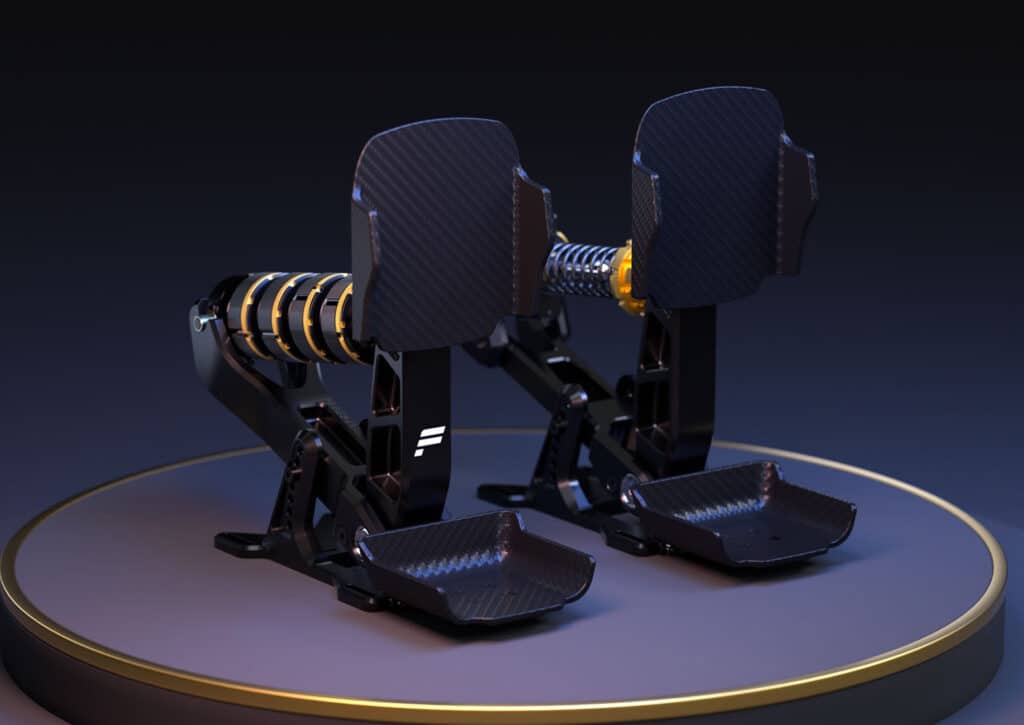
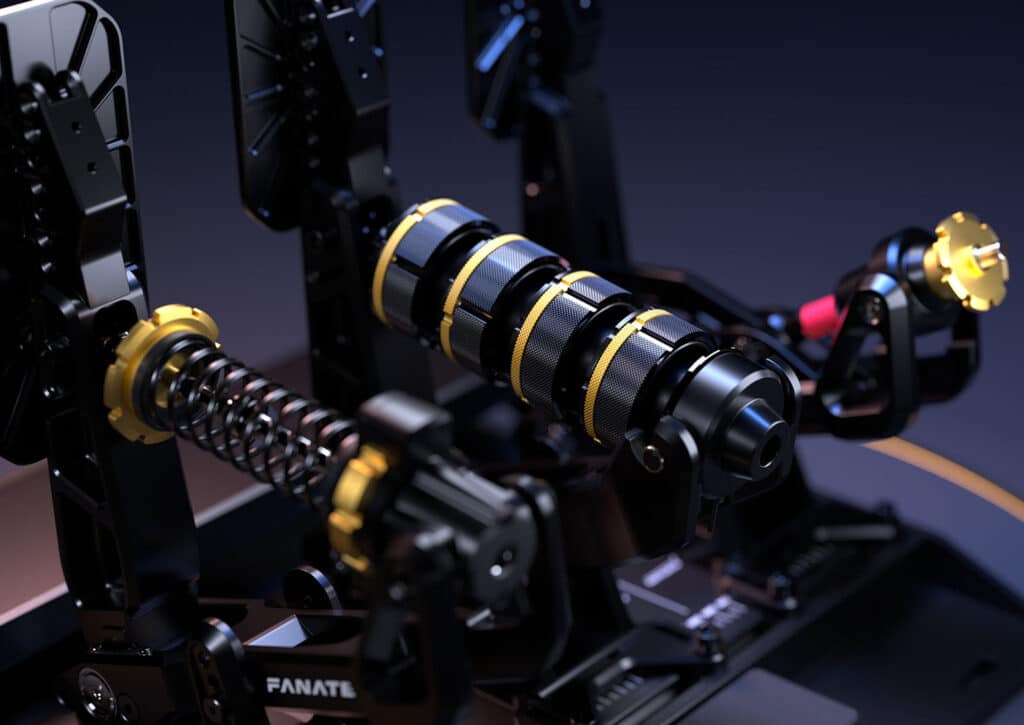
Fanatec arrives with its new Podium Pedals, announced for July at $699.99. Two configurations are planned: a more classic three-pedal version, and a clutchless Formula version with carbon heel-rests and side supports.
The brake is obviously the point to watch. Fanatec has announced a Load Cell capable of withstanding up to 200 kg, but perhaps the most interesting aspect is not so much the figure as the way in which it can be adjusted. Being able to adjust the brake without having to change elastomers can save time for those who often adapt their crankset to suit their car or discipline.
At this price level, it’s not enough to have an impressive spec sheet. Above all, you’ll need to check the consistency of braking, ease of adjustment and mechanical quality over time.
Simagic Zeus: a range of shuttlecocks designed for a variety of disciplines
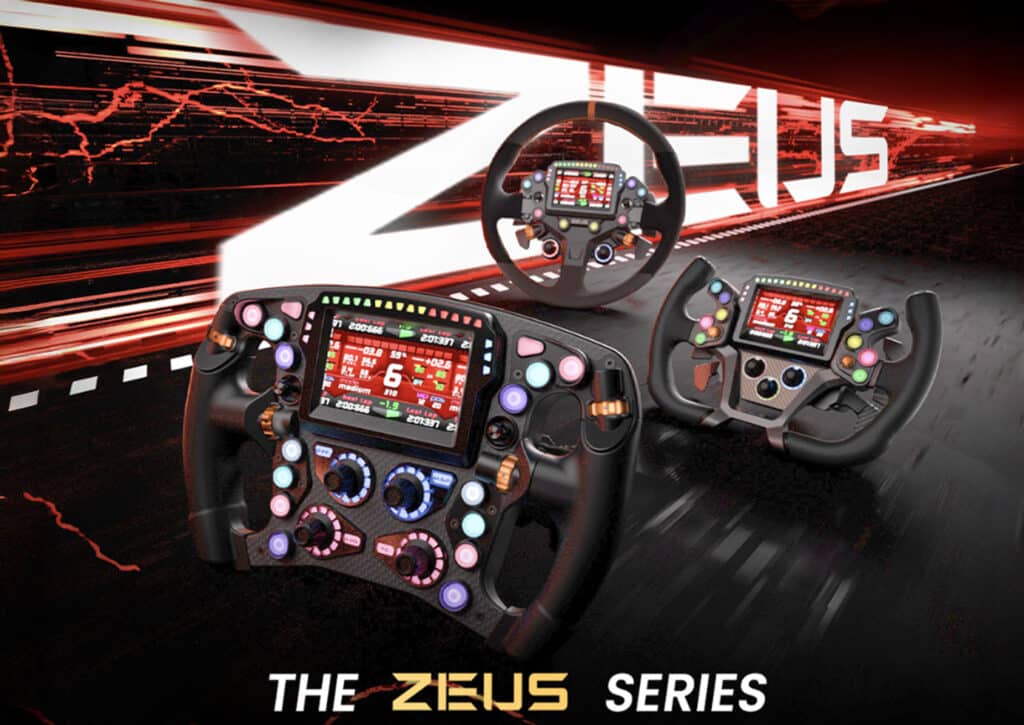
Simagic is also taking advantage of the event to promote its Zeus family of steering wheels. Three formats are announced: a formula-oriented model, an open-top GT steering wheel and a round version more suited to rallying or drifting.
The MagDock system is the most interesting part. The idea is to make the screen or certain modules more flexible, with attachment possible to the steering wheel or base. If cleanly executed, this can meet a real need: to keep a cockpit adaptable without multiplying the number of steering wheels and accessories.
The Zeus Formula seems to be the most ambitious model in the family. Simagic talks of a 280 mm format, meticulous construction and a large number of physical controls, with buttons, encoders, switches and magnetic paddles. The positioning remains clearly premium: we’ll have to wait for the final price to find out if the proposition holds up against other high-end steering wheels.
Thrustmaster and Nacon: Direct Drive continues its descent towards the console
Thrustmaster will be present with several products, including the T598its Xbox version, the T818 Black Edition and Raceline Pedals. In particular, the brand is pushing the idea of a more accessible Direct Drive, with products that speak to those who want to move upmarket without necessarily aiming for the most extreme bases.
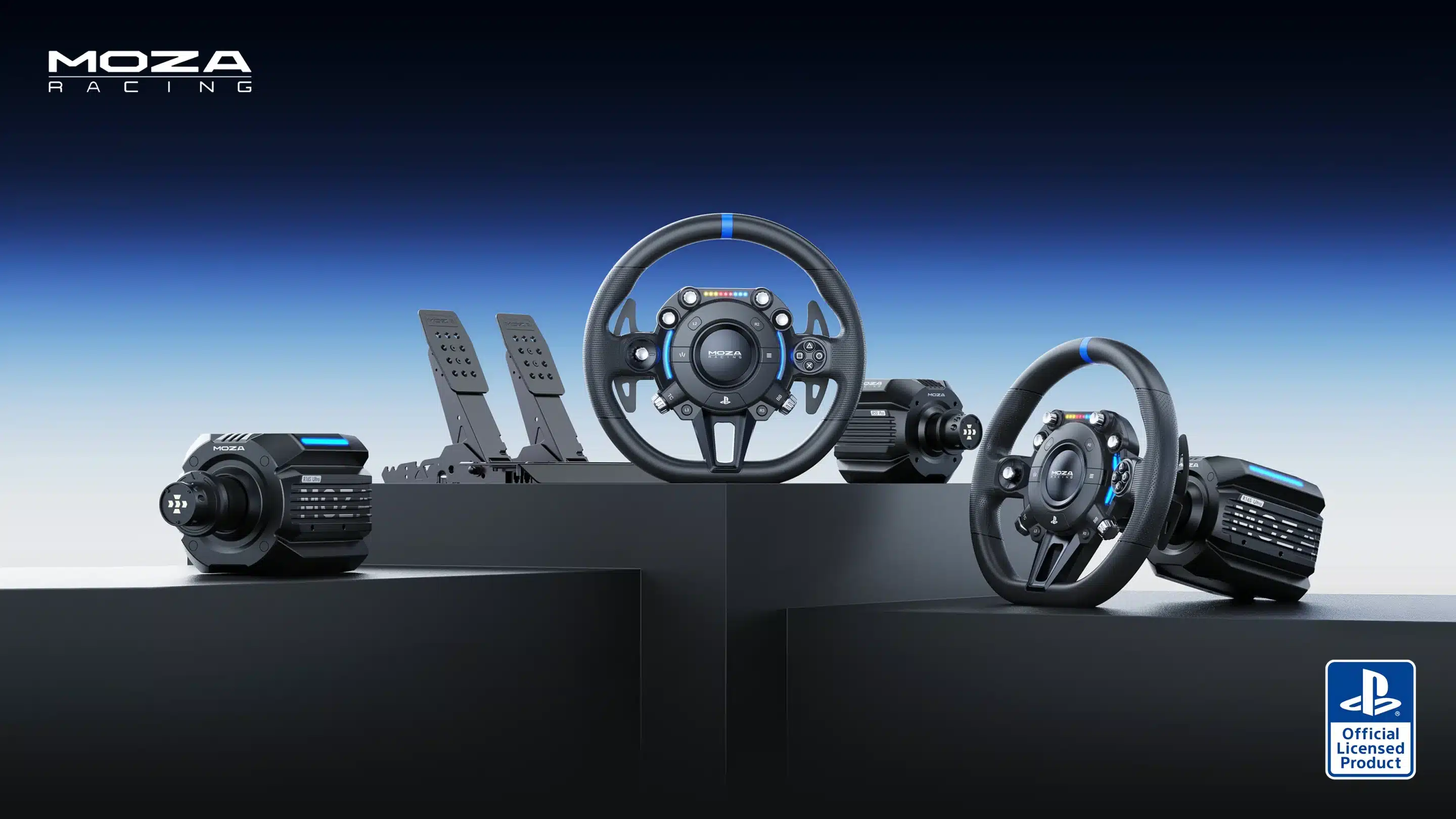
Nacon ‘s presence in this landscape is also one to watch, especially if the aim remains to make Direct Drive easier to tackle on the console side. For PlayStation and Xbox gamers, compatibility is often as important as raw power. This is where well-packaged offers can make all the difference.
Pimax Crystal: VR remains a separate option
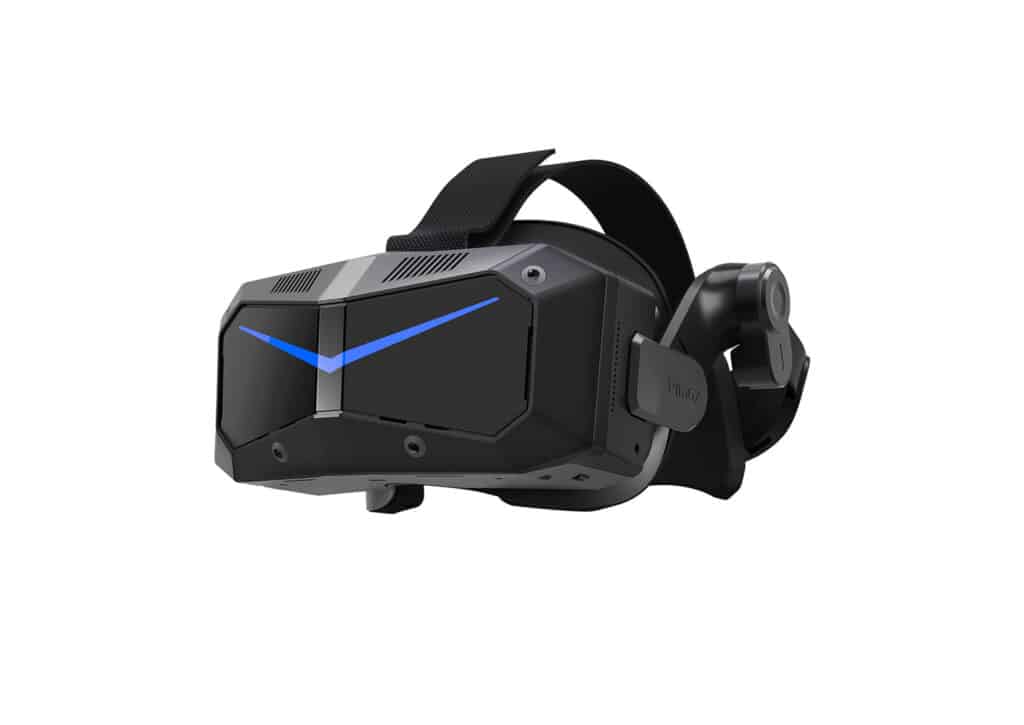
Pimax should also attract the curious with its Crystal headsets. The promise remains the same: a highly defined image, designed for those who prefer visual immersion to triple-screen or ultrawide viewing.
For sim racing, VR remains of obvious interest, but it is more demanding. You need to take into account comfort, the machine you’ll need, actual in-game sharpness and personal tolerance to the headset. For this type of product, a demonstration at a trade show can give a first impression, but it’s no substitute for prolonged use.
Heusinkveld DisplayDash: an accessory for advanced cockpits
Heusinkveld is to present a new version of its DisplayDash, announced for spring 2026 and priced at around €300. It’s not the most spectacular product at the show, but it’s aimed at a specific audience: cockpits that are already well-equipped and want to centralize displays and controls.
With an aluminum body, buttons, encoders, displays and SimHub compatibility, the DisplayDash may make sense for those looking for a cleaner setup. For a simpler setup, it will probably be a luxury. For an advanced cockpit, it’s typically the kind of accessory that can improve day-to-day ergonomics.
All in all, Charlotte 2026 provides a good snapshot of the market: more closed ecosystems, more modularity, more accessible Direct Drive and ever more accessories to fine-tune your cockpit. Announcements to keep an eye on include Fanatec Podium Pedals, Asetek peripherals and Simagic Zeus steering wheels. The rest will depend on final prices, availability and, above all, the first real feedback from the field.
0 Comments