
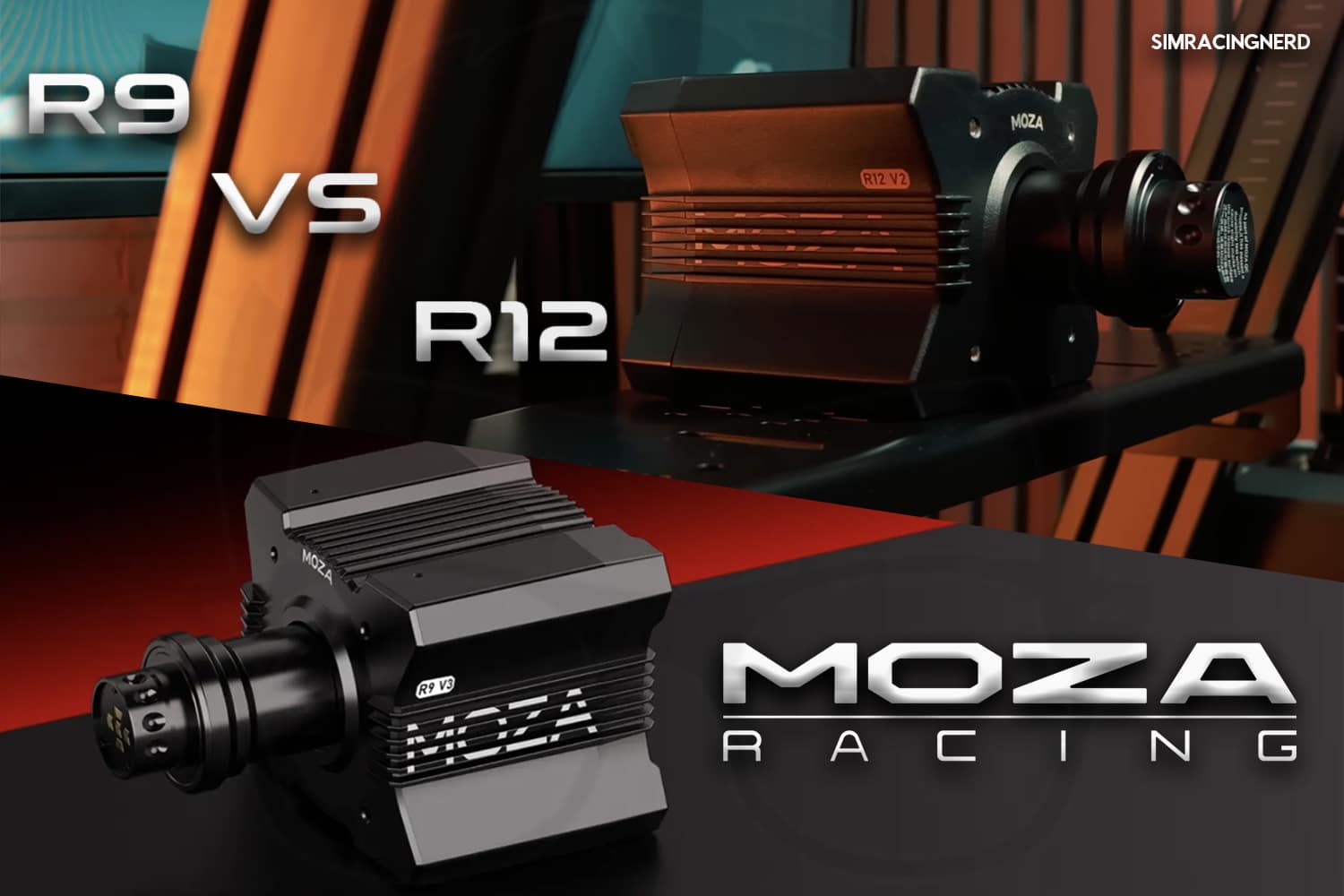

Is going from 9 to 12 Nm really useful, or is it just an extra 3 Nm on the spec sheet?
On paper, the difference seems obvious. In practice, it’s much less so. An R9 can already generate a tremendous amount of force, and increasing the maximum torque doesn’t automatically make the steering more precise or responsive.
The real difference lies elsewhere: in the headroom you have before the base reaches its limit. And depending on your car, your gain setting, and your driving style, those 3 Nm can be either completely useless or exactly what’s missing.
The 3 nm won’t make your steering wheel feel heavier
The stiffness you feel is the gain—just a slider in Pit House. You can set an R9 to make it feel like it’s tearing your arms off, just like an R12.
What the 12 nm changes is the point at which the motor reaches its limit. Once past that point, it can’t exert any more force, so any effects that exceed that limit get flattened to the same value. That’s clipping, and that’s where you lose information: the precise moment when the front end loses traction ends up sounding just like the moment before.
The R12 pushes this limit back by one-third. Not 25%, as is often reported: from 9 to 12 nm, the difference is actually 33%.
9 nm isn’t an entry-level process
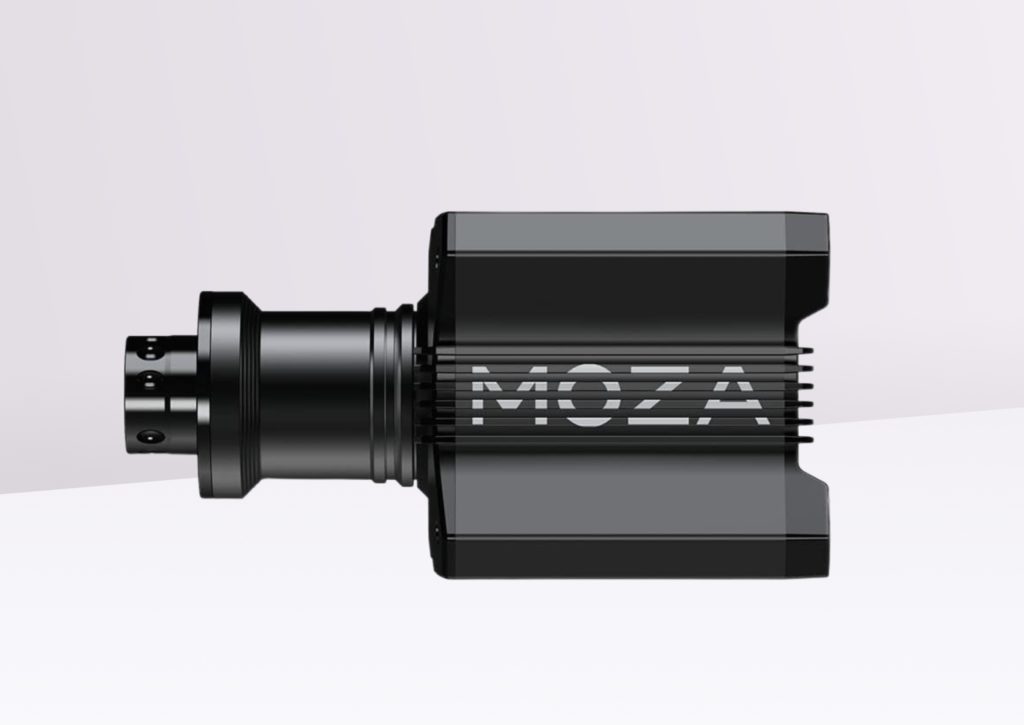
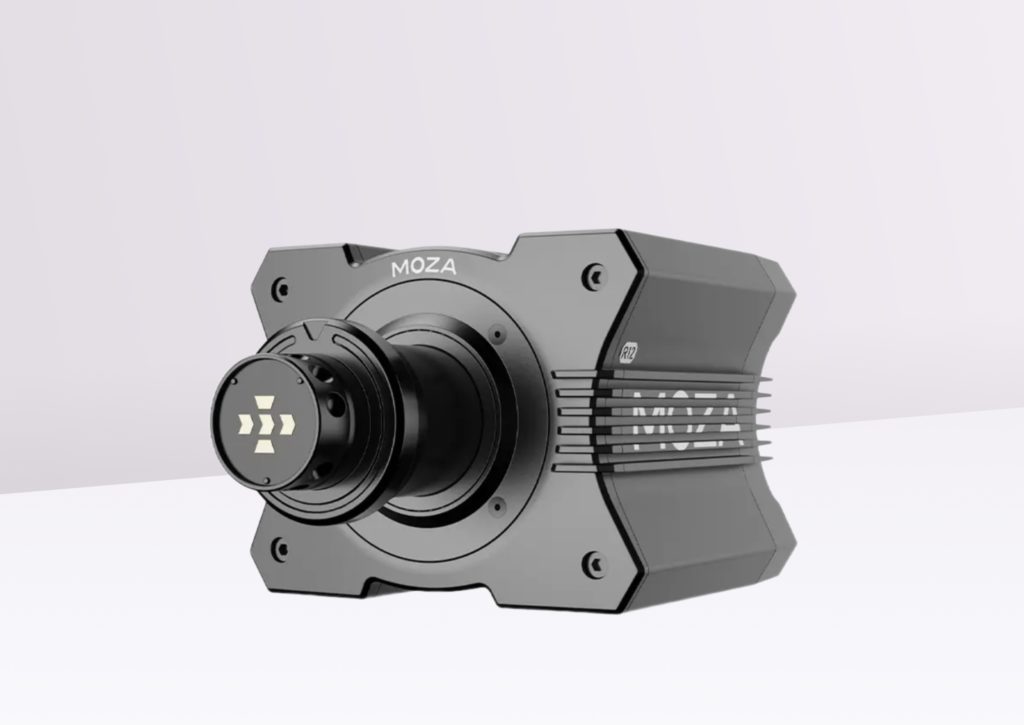
We need to put things into perspective, because the way this comparison is presented everywhere makes it seem like the R9 is the “poor man’s choice.” It sits in the middle of the Moza lineup, not at the bottom, and a very large number of drivers are currently racing on setups that deliver less than that without complaining about a lack of excitement.
The 9 nm limit only becomes an issue in one specific scenario: when driving the heaviest cars in GT3 or endurance races on ACC and iRacing. Outside of that context, you’ll never even come close to hitting it.
To put it another way, the R12 isn’t selling you a better driving experience. It’s selling you peace of mind. The question is whether you’ll actually use it.
The two situations in which the R12 is truly justified
You already have a rigid cockpit and mainly drive cars that require a lot of steering force. This is the clearest-cut case. If you have the right chassis and mainly race in GT3, where the gain is significant, the R12’s extra margin can really benefit you.
You already know you’ll go far. Buying twice always costs more than buying once. If you buy the R9 now and upgrade to the R12 in a year, you’ll pay the €130 price difference plus the depreciation on resale, whereas buying the R12 directly costs only the price difference. If you’re already sure of your path, don’t take the detour.
A quick note for those who already own an R9 and are hesitant to upgrade. There’s an easy way to tell if you’re reaching the base’s limit: lower the gain by about ten points and run three more reference laps. If the steering wheel simply feels softer without you losing any feedback, you probably weren’t clipping the limit—so the R12 won’t make much of a difference. On the other hand, if you lose some force but the vibrations, loss of traction, and load changes become more noticeable, that means you were probably saturating the R9. In that case, the extra 3 Nm can really make a difference.
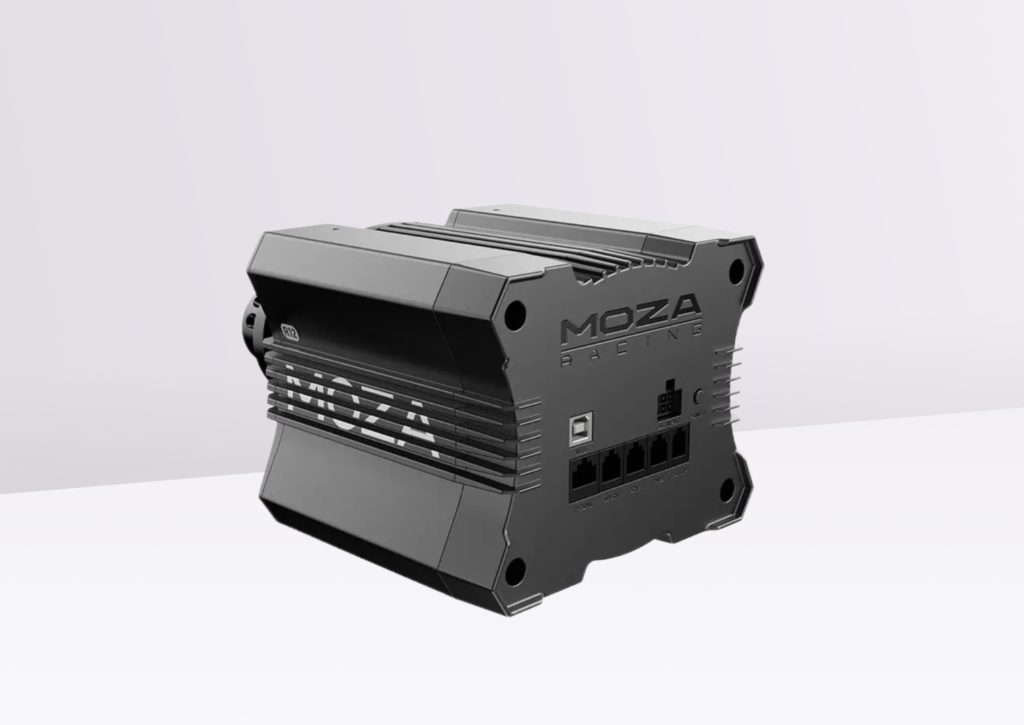
What really sets the two bases apart
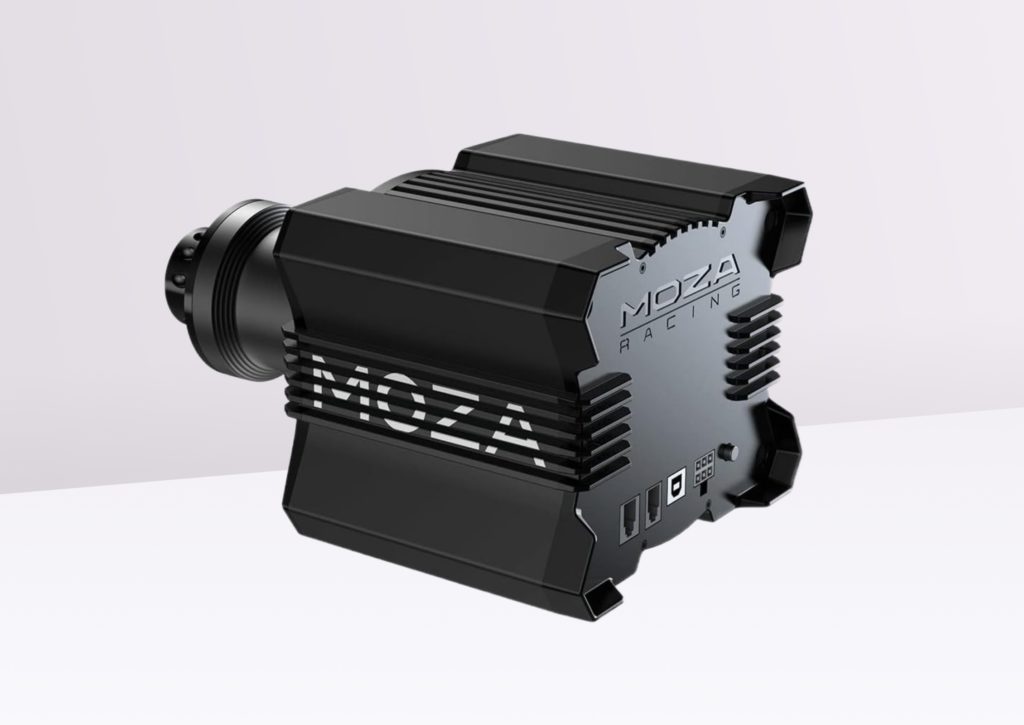
Aside from the couple, the list is only three lines long.
- Price. €399 for the R9 V3 and €529 for the R12 V2, which are often available for around €350 and €460 on sale.
- Setup. The only thing to watch out for is the cabinet: the harder the bass hits, the sturdier the cabinet needs to be. On a tabletop resting on thin legs, the R12 will put a strain on the table, and whatever the table absorbs, you won’t feel it.
- Size. The R12 houses a larger motor, so its cabinet is slightly more imposing.
That’s it. The rest is exactly the same. Same metal housing, same drive shaft, same quick-release mechanism, same software, same catalog models, same feel within the operating range. You don’t gain anything by changing the base model, and that’s actually good news.
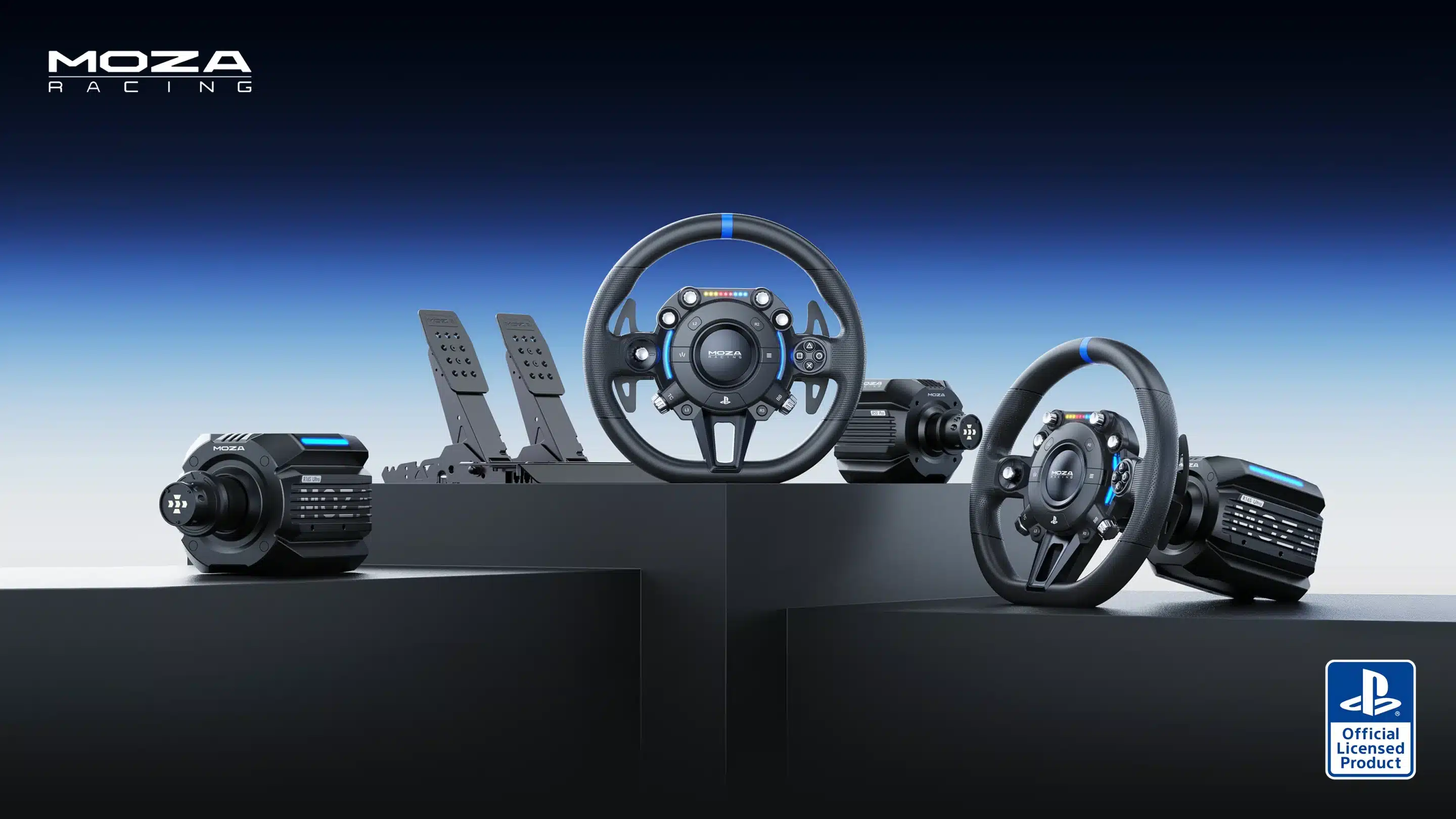
A quick note on platforms, since compatibility is no longer limited to PCs: the R9 and R12 bases can also work on Xbox, provided they’re paired with the ESX steering wheel, which is officially licensed by Xbox. As for PlayStation, however, MOZA currently states that its products do not support the PS4 or PS5.
My verdict
Go with the Moza R9 as your default choice. That’s my recommendation for the vast majority of people reading this comparison. It’s responsive, performs exceptionally well in both ACC and iRacing once set up, fits easily on a desk, and the €130 you save goes a long way toward covering the cost of a decent set of pedals. For the vast majority of drivers, it won’t leave anything to be desired.
Go with the Moza R12 if you already know you’ll be racing primarily in GT3 or endurance events with high lap gains, or if you’re certain you’ll be doing so within the year. In that specific case, pay now rather than twice.
Don’t trade in an R9 for an R12. Between the trade-in value and the price difference, the deal will cost you a lot for a benefit that only becomes apparent when the R9 is pushed to its limit. For the same budget, a load-cell pedal set will make a much bigger difference to your riding experience.
0 Comments